![Our Tips For Travel Photography Guide [UPDATED FOR 2026]](https://theroamingrenegades.com/wp-content/uploads/2023/03/travel-photography-tips-for-beginners-gear-368x552.jpg)
- Hire a professional to do the work for you!
- Going it alone: Travel Photography Tips for Beginners
- Travel Photography Tips for Beginners
- Check out the weather forecast and light conditions the day before
- Travel Photography Tips For Beginners: Give yourself enough time both in a location and when taking photos
- Get to know your camera and equipment before your trip
- Travel Photography Tips For Beginners: Learn at least the basics of photography and develop your skills
- Consider composition, leading lines, and how to manipulate your image to tell a story: Think about what you want from your image
- Travel Photography Tips For Beginners: Bring the right equipment for the job!
- Taking photos of yourself and of other people
- Travel Photography Tips For Beginners: Back up and keep your images safe on the road
Hire a professional to do the work for
Chapters
Hire a professional to do the work for you!
Maybe you think it sounds a bit self-centred and dramatic to hire a professional photographer for your trip, but in reality, it can be a fun and simple experience with benefits beyond simply having good pictures.
Finally going on that once-in-a-lifetime trip is something you’ve dreamt of and planned for years, so why not get a professional to capture at least some of your time there? Maybe you’re hopeless at photography, or you don’t want the hassle and stress of trying to take great photos of each other or yourself and just want to enjoy your time. Hiring a professional allows you to just relax and know your memories are being captured beautifully.

It might be that you hire a professional for a particular activity or event or even better as a local guide. Having a local willing to help you is a good way to get yourself oriented and answer questions you might have about food, customs or history.
With photographers like the ones from Localgrapher, you will not only have a local who knows the best places to do a photo shoot, but also someone with insider knowledge to help you discover so much more about your destination. You will also get access to some locations you probably wouldn’t have otherwise even known about or a unique angle on some of the more well-known landmarks of your destination from your personal photographer.
It’s not something for everyone but it’s something worth considering even just for a day or a particular place you might be visiting. Once you get over any awkwardness you’ll be left with some incredible photos from your trip.

Going it alone: Travel Photography Tips for Beginners
Study other photographers and practice different styles
One of the best ways to improve your photography is to look at what other photographers are doing and take inspiration. One of the first things we learnt in Art School was imitation before we began developing our own style. Finding photos and imagery you find inspiring or reflective of what you would like to achieve in your photography allows you to visualise your ideas. Learning from other photographers and developing an idea of what you want to achieve is one of the travel photography tips for beginners we highly recommend.
Have a look online at Instagram, 500px, and Flickr as well as buying photo books online and using them all as inspiration to find your own style.
Our Favourite Travel Camera & Lens
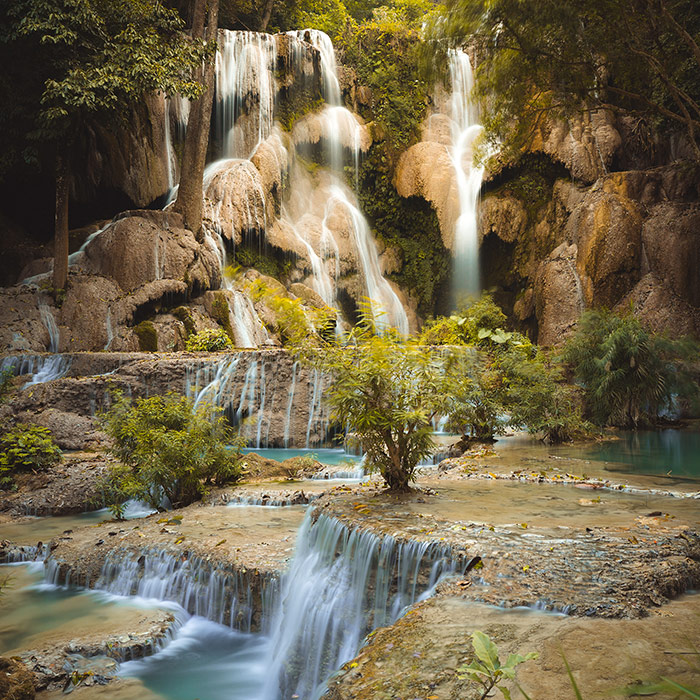
Sony A7IV & Sony FE 24-105 f4
The Sony a7IV is the perfect travel camera. Offering incredible image quality, great portability and a varied lens selection.
Our favourite travel lens is the Sony FE 24-105 f4. it’s a great all-rounder, super sharp and a perfect focal range for travel.
A great starting point is to take some photos you love and just try to recreate a similar scene or effect. This means that you start to look at ways you can manipulate your camera to produce certain images, and you start to look more closely at composition and the effect it has on the image and where your eyes are drawn to.
Studying well-taken, successful and inspirational photography is the best way to learn. You should also try to find images that come with info such as what shutter speed, ISO and aperture so you have an idea of how the photographer created the image.
It really is true that photography is a lesson best learnt whilst travelling, where you feel the most inspired.

Collect some photos in different styles and experiment with trying to recreate them and then using them as inspiration to do something similar but telling your own story. It’s a great way to discover new angles, poses, viewpoints, compositions or ways to use light that you might not have even considered!
Travel Photography Tips for Beginners
Get to know your destination and have an idea of the shots you want before you go
If your main aim when visiting a destination is photography then a great thing to do is research photography of the place before you visit. Even if you’ve been doing photography for a long time this is one of the travel photography tips for beginners that really helps you to be efficient and visualise what you want to capture before you even get there.
Generally speaking, published imagery of a landmark in books or on postcards etc will have been taken by someone who is a professional and has studied all angles and lighting before settling on what they consider the best! So finding that same angle is probably a great way to get a great photo of the place you’re visiting.

Ok, that might not make for the most original image! So another great way to research a location is through photo-sharing services such as Instagram. Here you get a range of images from snapshots to professional images from all and every angle. It’s a great way to find inspiration and discover some lesser-known details or another viewpoint you might not have to know about.
Of course, don’t just copy what others have done but studying the layout and angles before you visit can help you have a better idea of how you want to capture it yourself and give you some ideas for your own unique photos too. It means you can be more efficient when you visit and make the most of your time!
Check out the weather forecast and light conditions the day before
Sometimes the weather can play havoc with your photography plans, it changes the atmosphere of images and can greatly affect the light. Of course, good photographers should be able to create beautiful photos in all weather and inevitably it is something you will have to suck up and deal with on your travels! Checking the conditions before though is one of the simplest and easiest of our travel photography tips for beginners to do and especially in the early days taking photos in ideal light is easier as you get to know your equipment and the fundamentals of photography.

Many photographers use the weather to create a certain aesthetic and atmosphere in their images too. However, you should check the forecast and maybe plan your days and shoots around that if you can if there is a certain light and conditions you are looking for.
Maybe you want to do some landscape photography and want a nice bright sunny day to really bring out the layers, or you have some images in mind with very harsh light and shadows.
It might be that you want to do some portrait photography where slightly overcast conditions are more flattering. Having an idea of the weather a few days before can help you plan or even have a plan B and some other shots in mind if the weather changes.
Another huge consideration when taking travel photos is the direction of the light on your subject. I’ve seen many people before wonder why photos look different from another they took or what they imagined and most of the time it comes down to light.
One of the simplest travel photography tips for beginners is to just look at the light before you frame your shot and to walk around your subject as you do so. Sometimes you want your subject in the light, other times you might want it behind. Experiment with different conditions before your trip!

One thing to bear in mind is that midday is the worst time for light as it is right above you and your subject (unless on rare occasions that is what you are after).
Mornings and afternoons are better times to take photos as the light is pointing more in one direction which can light up your subject or create interesting shadows. Something a lot of people forget to do is to walk around their subject and see where the light is, just a few metres on either side might make all the difference.
We found this, particularly at the temples in Southeast Asia that are often symmetrical, so if the light isn’t great on one side then it’s usually great around the other!
A great thing to do is to try to find out before you visit where the direction of the light will be before your visit which will allow you to time your visit better.
The phone app Lumos allows you to see on a map where the light will be pointing at different times of the day and year which is super useful as well as having an augmented feature you can use through your phone camera if you are at that location to see the path of the sun.

However! With all these things in mind, you should also learn to take good photos in less-than-ideal weather and lighting conditions as you won’t always be able to wait it out for the ideal conditions or the right time of year!
Learn how to make clouds look dramatic or how to make the harsh midday sun work if that’s the only time you have to get the shot too. It’s best to get to grips with your camera and how it processes different scenes and light before your trip so that when you’re faced with certain conditions you will know what to do!
Our Favourite Camera Bag

Wandrd PRVKE 21
We absolutely love the Wandrd Prvke!
It’s mega comfortable when when fully loaded. Has side access so you can grab your camera on the go. The material is weather resistant and there’s even a secret passport stash pocket!
There’s an expandable upper section with a roll top to keep gear separate from your camera.
Travel Photography Tips For Beginners: Give yourself enough time both in a location and when taking photos
One of the most important aspects of photography is time. Sure, some photography is very much time based and getting good at taking photos quickly is a really valuable skill to not miss the shot. But especially at the beginning of our travel photography tips for beginners guide we really recommend taking your time and thinking about your shots.
When visiting a location you should give yourself enough time to take the photos you want and not rush the process. This could mean giving yourself a few extra days in a place to allow for better weather or for an event.
It might also mean rather than just stopping and taking a quick snapshot you hang around for the lighting to change or take a few extra moments to compose better or find a new angle. You might also take a moment to try different settings or for a scene to develop.
Rushing a shot usually ends up with disappointment! If you’re serious about your photography then give it time. There’s going to be plenty of occasions where you can’t take your time too whilst travelling, but try to plan for it if possible.

As with all photography though there is always a “however”. As much as there is something to be said for taking your time, there is also something to be said in photography for just taking the shot when an opportunity arises.
It’s a good thing to get to know your equipment and your settings which is where the next tips come in!
Get to know your camera and equipment before your trip
Getting to know your camera and equipment before you head off on your trip is the best way to be sure you get the shot and practising is an important aspect of our travel photography tips for beginners guide. Buying an instructional book for photography is always a great idea too.
Knowing how your focus system works for example will help avoid lost shots. What shutter speed you can get down to before your images are blurred on your system and lenses, what your sharpest aperture is for your lens and focal lengths as well as its diffraction limit, and what ISO is useable on your camera?
These are things you should learn about specific to the camera you are using. A great way to do this is to take control shots using different settings and to analyse the results to see which works best. Then when you’re on your trip you can go straight to the settings that are best for each shot!

Travel Photography Tips For Beginners: Learn at least the basics of photography and develop your skills
Of course, learning about the basic principles of photography is the best way to be sure you take good photos by knowing how your camera works!
A good way to do this is to get a book or look online for some guides that will take you through the main aspects of photography such as ISO, Shutter Speed and Aperture with examples of the effects of each on your photos and how to use them. There is a lot more to photography; different lenses, focal lengths and sensor size as well as focusing distances to name just a few things. But knowing the basics is the beginning of taking better images and being able to do more with your camera.
As part of our travel photography tips for beginners guide we’ve done a run-through of the main 3 technical aspects of photography as well as shooting in RAW below:

Aperture:
The aperture is the size of the hole in which the light travels through and into your camera. It is listed as f numbers and rather confusingly the smaller the number the wider open the aperture!
So f2.8 is a larger hole than f11, yet f2.8 has a shallower depth of field (like the photo above) and f11 has a wider depth of field!
Aperture has two main effects on your image.
Firstly the amount of light allowed into your camera.
The wider the hole and so the more open it is. This means that more light is allowed into the camera so you could use a lower ISO and faster shutter speed with a lower f-number. If you want to use a higher f-number you would get a darker image unless you adjust your other settings. “Stepping down” the aperture is a great way to let more light into your camera but it comes with a compromise …
Secondly and more importantly is the depth of field.
Depth of field means how much is in focus. So here the lower the number the less is in focus. So f2.8 would be a very shallow DOF (Depth of Field) and f11 would be much wider.
So this needs to be taken into consideration when taking portraits or landscapes as well as macro photography and can be manipulated to create a very different image with one thing being the focus of the image or many areas.
Be careful though, shallow DOF requires more accurate focusing and pushing the f-number too high results in diffraction which degrades the quality of an image. Each lens has different diffraction limits and focusing distances so be sure to read up and test your own lenses too.

Shutter Speed
Shutter speed refers to how fast the shutter is released when you take the photo.
You will find values on your camera such as 1/15 (1/15th of a second), 1/30, 1/60, 1/125, and 1,1000 for example.
You can also get much slower settings of usually up to around 30 seconds or exposure as well as BULB which is usually where the shutter is held open for as long as you want.
Again, shutter speed has two main effects on your images:
The first again is the amount of light.
The time refers to how long the sensor is exposed to light so the slower the shutter speed the more light is let into the camera. This is why a lot of nighttime photography is long exposure to allow much more light into the camera so the detail of a dark scene can be revealed.
The second effect comes down to motion blur or capturing a moving image.
The slower the shutter speed the more likely the image is to be blurred and the quicker it is the more likely it is to be frozen on that particular point. Sports photography usually uses quite high shutter speeds but both can be used for artistic effect too by portraying speed and movement.

When it comes to shutter speed there are a few things you need to know.
Generally speaking, traditionally the general rule for hand-held photography is to keep the shutter speed quicker than 1/60 (so quicker would be like 1/100 or 1/2000). For things like street photography, you might want to up that to 1/250 and for pets and kids even higher to 1/500!
However, there are some other considerations.
If you need to go below 1/60 then check if your camera and/or lens has image stabilisation. Modern cameras can often be used handheld down to 1/20 or even 1/10 with new technology!
Also, some people just have steadier hands than others! Some can push below these numbers, some folks need to increase the speed!
Do some test shots before your trip to see what your camera and your hands are capable of as well as test out some different scenarios and see how different shutter speeds affect your images.
If you want to use a slow shutter speed you should consider using a tripod or putting your camera on a wall whilst you take the image to keep it still. You can also use self-timer or a shutter release cable so you don’t add any movement from pressing your shutter button!
Thirdly a consideration is the focal length of your lens.
The more zoomed-in a lens is, then it is the quicker your shutter speed needs to be to stay free of blur. The general rule is to use the focal length as a guide, so for 100mm it would be 1/100. But again on modern cameras/ lenses with image stabilisation, you can usually push this a little more.
Using a tripod is an ideal way to avoid blur when you need to shoot at slower speeds, but be aware, it won’t freeze your subject but just avoid motion blur from camera movement.
ISO
ISO used to refer to the film loaded into the camera and how sensitive it was to light as well as how grainy it is. In modern digital cameras, still does a very similar job but thankfully we can change it for every shot rather than being stuck for that roll of film!
In general terms the higher the ISO the more light is allowed into the camera.
However, like most things with photography, that comes with a compromise and isn’t as simple as it first appears!
The higher the ISO the higher the “noise” or grain within your image too.
This can be used artistically but generally speaking, it’s a bad thing and is to be avoided especially in digital photography where noise isn’t as much of an aesthetic as film grain!
If you can, shooting at base ISO, usually 100 is ideal.
However, conditions might arise where you need more light but you need to hand hold your camera and you can’t go any wider on your aperture without compromising the DOF you need … that’s where ISO comes it!
Each camera has different “usable” ISO values and that is also down to personal preference too. Again, experiment and see what you think. Also remember, shooting in RAW rather than JPEG means you can negate some of the effects of high ISO by controlling how the image is processed.
Also, be aware that larger sensors allow you to push the ISO more whilst still retaining usability. So a full-frame camera will deal with high ISO better than an iPhone.

Shooting RAW
Shooting RAW is getting more into advanced photography and requires a bit more work as well as file organisation.
However, if you take the plunge then you can get much better results from your photography. In our travel photography tips for beginners guide, we recommend trying it out before you travel and comparing the differences as well as the workload.
RAW basically is an unprocessed file and is often referred to as a digital negative. Most cameras produce JPEG images, which are compressed and processed images, the amount of compression and processing is decided by your camera and not you. They are also harder to edit too as their compression removes some of the information captured by the camera.
For a lot of people, JPEGs are good enough and cameras are getting more sophisticated with processing. JPEGs are also easier to store and upload directly to sharing platforms such as Instagram.
RAW files need to be processed and can be turned into JPEGs. The most used software for this is Adobe Lightroom but many of the newer smartphones also have apps that can process them, including a Lightroom mobile app.
These allow you to push the exposure, bring out details in light or dark areas and generally really push your images much more than you could editing JPEGS. In many ways, it means you can make mistakes when it comes to your exposure/ light when you take the image and fix it later on (You can’t fix blurred images or out-of-focus photos!)
But RAW files need to be edited properly and Lightroom does have a steep learning curve. Your files will be flat, lacking saturation as well as sharpening, lens correction and noise correction.
This is great because you get to do all those things to your own tastes, but you also have to do them properly. So learning how to use Lightroom is a good idea before you make the switch! You should also consider the increased workload to edit and process all your images especially whilst travelling.
Most cameras allow you to take JPEG and RAW at the same time too which is useful. Be aware RAW files are a lot bigger than JPEG and take up much more room!
You will probably want to get an external SSD to store your RAW images on when you travel to keep your laptop running well.

Other considerations: Camera Modes and Focus Modes
You should also learn about and experiment with different focus methods as well as different program settings on your camera as a start, though there are lots more settings you can experiment with the deeper you get into it. You should ultimately aim to try out and experiment with all the different buttons and setting on your camera so you’re comfortable with what they do and what effect it has on your image. Many cameras allow or have several customisable buttons that allow shortcuts to things like white balance settings, focus modes etc.
In the end, most people aim to shoot on full manual as well as manually focusing. Despite this being something to aim for it’s not always best for getting the best photos in every situation so you should use all tools at your disposal as well as know how to properly use these modes too!
For example, shooting A (Aperture priority) is a great way to have control over the DOP of your image but allow some of the work to be done by your camera, especially in good light where the shutter speed won’t be an issue or isn’t a major creative consideration in your image.
You can use the exposure compensation wheel in this instance to quickly adjust your overall exposure if you feel it’s too dark or light. Another idea is to use A as a starting point and switch to M from there to fine-tune your image.
Shooting in A is a great way to be ready for the shot and a good starting point to learn how your camera works. Keep an eye on the shutter speed your camera selects and think about its effect.
Equally, shooting full auto has its place and it’s usually something we use for things like selfies with mates on our compact camera. Honestly, if you REALLY don’t know what you’re doing then it’s always a good backup option rather than missing the shot and you can still control your composition!!
Sometimes Manual can be a double-edged sword, master it and you’re photos will be so much better and you’re in complete control over the exposure, but use it wrongly and you’ll end up with even worse photos! Practice is key!
Auto can be a good guide as a starting point to adjust from or just for a backup photo if you’re unsure!
When it comes to focusing manual isn’t always the best and taking advantage of the various focus methods with today’s very accurate AF systems is something to bear in mind. Modern cameras are often more accurate and fast with focusing and you should consider the various settings available.
One that we use a lot is the adjustable focus area on our camera, it’s essentially a box that can be switched from S, M, and L that you move around the screen over what you want in focus and it’s very accurate!
So when taking a portrait we would move the small square over the eye of our subject for example. It’s even very useful in landscape photography to get a good hyperfocal distance or to place over a foreground subject to either focus on that or move the box over the distance to have an out-of-focus foreground element.
We usually only switch over to full manual focusing for things like macro photography or low-light situations where AF can struggle. You should also consider looking at face recognition AF which can be useful as well as locking AF and Continuous AF modes which are good for moving targets.
Consider composition, leading lines, and how to manipulate your image to tell a story: Think about what you want from your image
Beyond the technical side of photography, it is a creative pursuit and when creating an image you should consider what you want it to say.
Is it just a snapshot, a fun selfie or are you trying to capture a narrative or bring attention to a certain thing?
You should consider your composition, leading lines, what is in focus or how the shadows affect the image or movement.
Use your knowledge of the technical side along with your creative ideas to construct your image. Think about what you want the eye to be drawn to or what you are trying to say with your photo or trying to capture.
Are you trying to capture the grandeur of a landscape or the details of an interesting feature, or do you want to take a photo of a local seller at a market surrounded by their product? Does a shallow depth of field work better to bring focus to one particular area or should you use a wide DOF to capture the entire scene?
Travel Photography Tips For Beginners: Bring the right equipment for the job!
Travel photography is challenging because being on the road isn’t the ideal situation to be carrying a lot of heavy and expensive gear! Another photography compromise is bringing along the right equipment that will allow you to capture your photos but also not weigh you down and become cumbersome when you’re trying to enjoy your trip!
Do you bring your SLR with many lenses or stick to your point-and-shoot or even your phone? Well, the saying goes that the best camera you have is the one in your hand and you don’t need fancy and expensive equipment to take good photos. In fact, sometimes it can make it harder if you don’t know how to properly use the more complicated equipment and it just becomes tiresome to try to use.

What to pack really depends on you as a person and a photographer. Compromising on bringing a zoom rather than several prime lenses saves space and weight. Buying a mirrorless camera such as the Sony A7ii, which is what we use, makes your bag lighter too. I’ve also known people bring along large lenses and SLRs but just use their phone cameras because it was too cumbersome and complicated and took the fun away from their trip!
Our go-to cameras for travelling are:
Our Photography Gear

Camera
The Sony a7 IV is a Full Frame Mirrorless Camera with Interchangeable Lenses.
The Sony Alpha 6600 is a cheaper APS-C mirrorless alternative.

Lens
The Sony 24-105 f4 is a great allrounder for travel photography offering a good focal length range.
On the Sony a6600 the Sony E 16-55mm f/2.8 G is a great option with similar range.
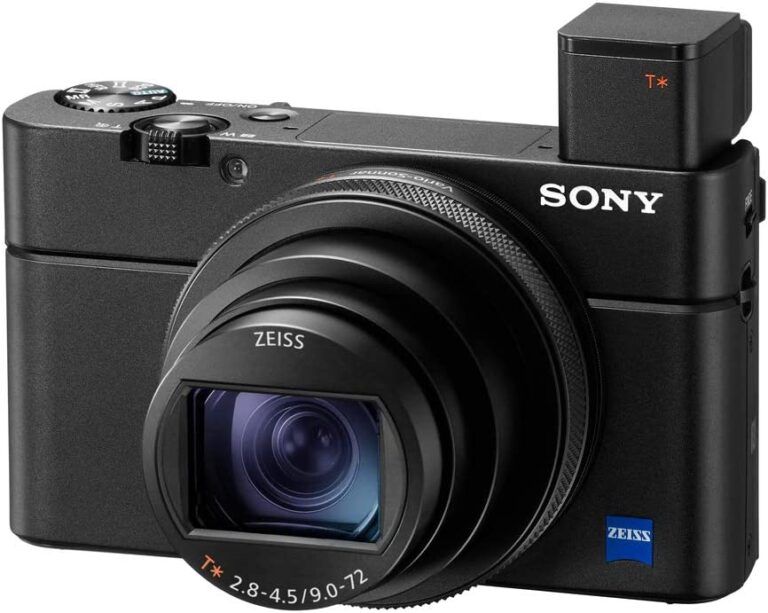
Compact
We love the Sony RX 100 VII as a great quality compact. It’s 1 inch sensor, full manual controls and articulating screen make it perfect for selfies!
The GoPro Hero 11 Black is also a must for any trip. It even shoots in RAW and is perfect for water based activities

Other
We love our iPhone 15 Pro Max for capturing those lowkey moments and for being so accessible at all times. The video is also great and we loved the photo editing apps too.
Our go to backpack is the Wandrd Prvke Backpack which has side access and heaps of room for lenses as well as a separate section for other items
Think about the style of photography you will be doing, the length of the trip and how much you can carry. If wildlife photography is your thing then large, long lenses are needed for sure! You might want to bring a tripod as well as get a good quality camera and lens bags too. Or, you might decide that your compact or your iPhone will do the job you want.
Read more about our equipment here: The best camera for backpacking, hiking and travel photography guide!

Taking photos of yourself and of other people
One of the main aspects of travel photography is taking photos of you as well as other people you meet along the way. Both have different considerations!
Taking photos of yourself.
This is easier if you travel with a buddy rather than by yourself but it can be frustrating either way. Travelling on your own you rely on either selfies, tripods or other people and similarly if you are a couple wanting a photo together.
Selfies are a great way to get a quick and fun shot together or of yourself. The only problem is that sometimes you’re shooting blind, other times you’re using the front-facing camera that is lower quality or as you are closer to the camera you end up with your background being more out of focus than it would be if you were further away from the camera.

Asking other people is a mixed bag! I’ve generally found that lots of people are pretty bad at taking photos and with mobiles being more and more popular many people don’t know how to focus even a point-and-shoot camera (hold halfway down and then click!!). But that being said if you hang around long enough you can often find someone who looks like they know their way around a camera and if you do you will likely get a nice photo! Though you might feel awkward posing and wanting a few shots so there is that! Of course, you can teach your travel buddy how to take good photos of you or keep asking them again and again until they get it right!! ha.
A tripod is a great way to get a photo together. If there are two of you it is a lot easier to set up and focus. You can put the camera on self-timer, focus on one of you with a highish f-number and be sure to stand at the same plane of focus as your partner when you run into the frame! Focusing when you’re on your own is harder and can be a bit more hit-and-miss. If you can focus where you will be standing or use face recognition autofocus then you can get around that.
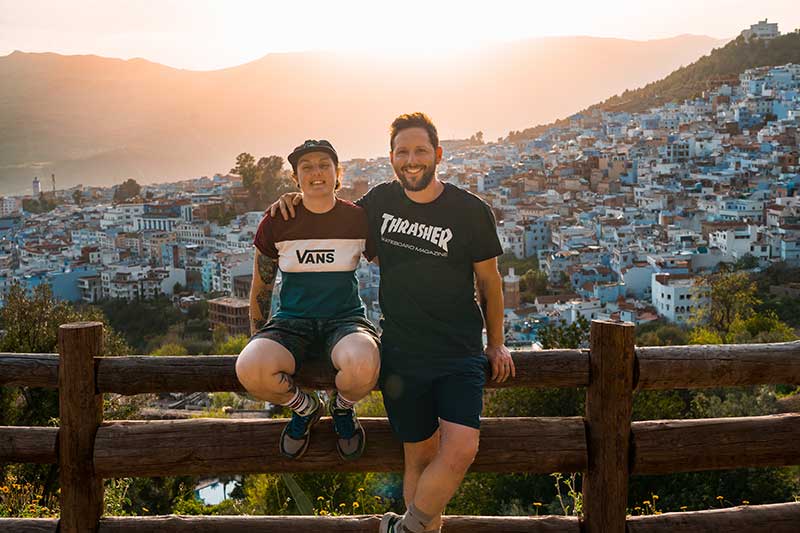
Taking photos of other people/ portraits
Taking portraits of local people when you travel is a really rewarding way to capture your experience there and the human side of your travels. However, it’s not the easiest and can be a minefield!
Firstly, on the technical side, you should use a low f-number for portraits and focus on the eye of the subject to be sure the focus is on them and you separate them from their background. You might want to change your f-number if you want some of their surroundings in focus too.

Secondly is the hardest part, approaching the person! We are still working on this and it can be quite hard to get right. Sometimes you want natural images and other times you want a more traditional portrait. Getting permission is usually a must but it does depend on the situation.
A marketplace is usually much more free game than someone sitting having a coffee on the street but every situation is different! Some people want to pay for photos, others you might want to buy something from them if they’re selling and then they will be happy to pose, others are just happy to talk or even just a nod. You should read the situation and always be respectful of your subjects when travelling as some cultures do have real issues with photography.

Travel Photography Tips For Beginners: Back up and keep your images safe on the road
Ok, so you’ve got your photos and you’re happy with them, but you’re still on the road and want to keep them safe!
To do this you will need to set up cloud storage as well as utilise external memory. If you take all your photos on your phone then be sure to set up iCloud or the equivalent on your device which should back up your photos when you have internet.
Otherwise, you will have to have access to a computer on your travels so you can bring your laptop or use library computers. We use an external SSD Drive to create a complete backup of our laptop. We also use pen drives to back up our photos as they are less breakable and also have cloud storage set up on our laptop through dropbox as well as using Smugmug.
It’s a little bit overkill but we take keeping our photos safe pretty seriously! You can come up with a system that works for you.
Back Up Your Photos Here

Get A SmugMug Membership
We take heaps and heaps of photos when we’re travelling but it can be anxiety inducing to think about loosing them.
Grab a SmugMug membership and back up all your important photos, including RAW storage in the cloud.
SafetyWing Travel Insurance

SafetyWing
Travel insurance is one of those annoying things that no one likes to think about, let alone pay for, when you’re planning your next trip. It can also be bloody annoying as a backpacker/long-term traveller to find affordable coverage that meets the itinerary-less lifestyle (*cough* World Nomads *cough*).
So instead of getting subpar travel insurance, now we just always go with SafetyWing. It takes like 5-10 minutes to purchase your policy and essentially functions as a monthly subscription plan with near-global coverage!

Organise Your Trip Here
Share This Post!
For transparency’s sake: Many of the links we have on our site are affiliate links. This means that when you click one of these links and make a booking or purchase, for example: accommodation, gear, insurance or transport, we earn a small commission (at no extra cost to you). Also, know that as an Amazon Associate, we earn from qualifying purchases. Most importantly, know that we still only recommend services, gear and products we believe in and our earned commission helps us keep travelling and bringing you high-quality posts and content.


Yo, I’m Nic (they/them), one-half of The Roaming Renegades.
I’m an adventure (and halloumi) obsessed traveller with a passion for hiking mountains, exploring cities, watching Arsenal win, moshing out to Rammstein in random European fields and getting hopelessly lost on a motorbike somewhere in Asia! I am also a proud member of the LGBT+ community.
I’ve explored 80 countries, lived in Australia and New Zealand, and spent months wandering Southeast Asia, South America and Eastern Europe, all while trying to avoid growing up!
Did it work? I dunno, but my back hurts, and I still collect Pokémon cards! Who wants in?!




What a great article, and very in depth! Shooting RAW is the best way to go. As you said, it gives so much flexibility over the processing of the photograph. I take two cameras with me, when I go cycle touring. My Nikon D5300 (pretty heavy), and a Canon SX700 HS (for a really quick photo, if I need to).
Thanks! Yeah we’ve noticed a big difference since shooting RAW but it also does add a lot more of a workload too. We have our Sony Mirrorless A7ii as well as SonyRX100 that we use more for selfies and snap shots. It’s nice to have both especially for the quick shots!
The problem with digital is that it can make you lazy. I took better quality photographs when using film – because it was more expensive, it taught you to conserve, therefore making you look for more quality.
Yeah that’s true. It’s also a lot easier to edit and “fix” photos in lightroom than it is going through the long drawn out process in a dark room. It’s got good and bad elements. For sure you think about the shot more with film, make sure that exposure counts and that its right before you click!! I think in terms of photography that is more of a benefit. But in terms of capturing the small things, people, snap shots for yourself then digital is awesome! It’s also nice to not miss a shot because you’re conserving too!
What a great comprehensive article for getting started with travel photography. I’m going to get the App, Lumos, as light is so critical to getting a good photo. What I really struggle with is not having the time to get the photo you want. I think you make good points about doing the research beforehand, and maybe staying a little longer in one place if your main purpose is photography. The shots are usually better once you know the place a little.
Thank you very much. Yeah that app has come in so useful and goes hand in hand with time and researching the place too so you can be sure to get there at the right time of day and know some angles too. Yeah, often when travelling I feel a bit rushed and that’s a big factor in getting the photos you want, sometimes that is just the nature of travel but if you can plan extra time or days it gives you a better chance of getting the shot, but it does depend on your main reason for visiting!
Digital, or digital SLR is a real godsend. I can remember the days of strictly using film. Even thought that seems quite archaic in this day and age I preferred it, even though I rely solely on digital now.
There was something compelling about film, anticipating what the snap will look like as opposed to seeing in an instant. I had a Canon T60 SLR film camera, but I never traveled extensively with it. Still, I can use all the hints I can get, so I will pay heed.
Yeah, I remember as kids we just had film and you never really knew if you had got the shot until you got home, but these were just holiday snaps. I’ve used film a lot in my artistic practices and really do love the look of it and would use it more if it wasn’t so inconvenient especially when travelling and also carrying more cameras! Digital is so much better for making sure you’ve got the shot and taking more photos to be sure, though I do like how having less exposures makes you think more about your shots which is a good and bad thing at the same time!
I have soooooo much to learn about photography and truly appreciate (and agree with) all of these tips. In fact, I’ve pinned this post and look forward to referencing these tips regularly as I continue to improve my photography skills! Although, internally, I’m struggling a bit with recommendation #1. For a destination wedding or a trip of a lifetime, no problem. You want a professional to capture those moments, and I don’t think it’s self-centered or “extra” (as my teens say) at all. But I see more and more people who spend their travel time obsessed with getting the perfect shot for Instagram over truly absorbing the sights, sounds, history, culture, tastes, and experiences around them. And, other than a big once in a lifetime trip, #1 just seems to reinforce that trend. I guess the best thing about a free society is that I get to do what is comfortable for me, and others get to do what works for them. Right? 🙂 ~ Sage Scott, the Everyday Wanderer.
Thanks, yeah there is always so much to learn and we’re not professionals at all and we’re still learning for sure.
In regards your other comment. I don’t know, I actually see it the other way around. I think that can happen whether you take the photos or someone else does if you’re more bothered about getting the perfect shot then its going to be more important than the experience either way. But if you hire someone for maybe an hour or so, get all those shots you really want, then maybe the rest of the time you can relax knowing you’ve got amazing shots so you can just get some casual holiday snaps and enjoy the place a little bit more! Or in our experience we’ve paid for photos whilst doing some activities such as rafting, surfing, paragliding and its meant we could just be in the moment and enjoy it completely without thinking about getting photos!
You know a lot about photography! I don’t know any of those and rely mostly on composition and auto settings. Thanks for the tips.
Thanks Carol! Your photos are always awesome! You should have a go and try a few new settings especially if you’re in one place for a while were you can experiment and it doesn’t matter if the photos don’t work!! I’m sure they will though!
Taking better photos is always work in progress. We take much nicer photos now, as we learned a lot, but there is still so much to tweak and improve. The composition is really so important, and taking different angles always help. Portraits are a real challenge though. Not so much on the technical side but engaging with the people, and getting the connection that allows for us to take the portrait.
Oh yeah for sure, we’re not were we want to be just yet in terms of photography but we’re improving all the time and trying new things. There is always something else you can learn though which makes it good but also hard too. Yeah, another aspect is the human side to photography which is probably the hardest part!
One of the best, most comprehensive photography tip guides I’ve seen. I do most of all of these and just like you, I’m a slight fanatic about my backups! Aperture is confusing in the beginning as is putting together all 3 of the mains (aperture, ISO, shutter speed). I agree where there are times manual isn’t the best choice. In fact, most of the time I don’t shoot in manual (because for me I’m still too slow and would miss the shot). I mainly shoot in manual for my night photography. Oh and lighting, yep…can make or break it for sure and you definitely need to be comfortable in shooting in all different kinds of light because you never know what it will be, but as you suggested, I try to look at the weather and plan out my top priority shots!
Thank you very much! Yeah we are too! Yeah it takes a bit of getting used to how they all work together. We probably shoot mostly in Aperture priority because that usually has more of a bearing on the type of shot we want and everything else is incidental as long as the light is enough to not need a slow shutter and we keep ISO fixed on 100 so the camera doesn’t change it! Either that or we do as we mentioned and look at the shot in A and switch to M to maybe fine tune the shutter speed! Weather and lighting is such a challenge, you want the best conditions but need to be confident in all conditions!!
Loved the tips guys, it was very comprehensive and technical to the right degree. I’m sure that those who are just beginning in their travel photography journey, will definitely be helped. We are trying to learn how to take photos with better composition and lighting. Will apply your tricks and see the results. Thanks 🙂
Thanks! I hope so, there is of course so much more to it and so much more we need to learn too but its a good start!
Grand Central! So cool guys. We will be there in one week on our way to Connecticut. Great tips here for snapping the perfect shot.
Was a great place to get some of our wedding shots! Cheers. Enjoy NYC.
Wow, these are really good tips. I would never think to research the lighting, weather, and angles before traveling to make sure that I have the best conditions! But then, I am also just a mobile phone photographer, so I just take whatever I can get with my phone and edit a bit later! I would love to really learn photography someday, though.
Thanks! Yeah its a bit pedantic I suppose but if you’re visiting somewhere for photography then it can make a huge difference whatever you take your photos on! Phone cameras are great and so practical and a great way to get into photography, I think some do have functions like aperture and shutter speed or apps that allow that so it’s a nice way to get into it.
Great tip about researching a location on Instagram. That’s what I usually do too in addition to Pinterest. You have some beautiful shots here!
Yeah, its great for finding out new places to visit too as well as just for photography! Thanks!
Excellent tips, and your images definitely show that you know what you´re talking about! One of my goals this year is to improve my travel photography and I´m bookmarking this post as a reference, thank you!
Thanks! Have fun with it and try out new things!