Grab your cuppa and a fresh Gregg’s sausage roll, because it looks like you’ve decided to come over to the land of rain and … complaining about the rain!! Ah yes, the UK, our homeland, somewhere we both love to escape and love coming back to, depending on the season!
In all seriousness, I reckon the UK might surprise a few people. Whilst we do have our fair share of castles, tea rooms and picture-perfect villages, we also do big (sometimes grimy) cities, casual football hooliganism and an exceptional array of crisp flavours!
Being from Great Britain, and having a true love-hate relationship with the place, makes me perfectly placed to deliver this list of UK travel tips with the perfect sprinkling of self-deprecation, sarcasm, and misplaced apologies, ya know, just to get you ready.
Sorry in advance!
Let’s hope you don’t get stabbed in Southeast London for the price of a bag of chips!! Just kidding, it will be for drugs, of course! Again, kidding, you’ll love it here once you get our humour!!
Alright then, let’s get into these top UK travel tips, because that kettle isn’t going to boil itself and that steak bake is getting cold!
There’s a few things to know before travelling to England, Scotland, Wales and Nothern Ireland…
1. The UK Is Four Different Countries: Experience Them All!
Right, let’s start with some geography, because for us Brits, this is pretty important (especially when it comes to football).
The full name of the UK is in fact “The United Kingdom of Great Britain and Northern Ireland”, a mouthful, let’s be honest. BUT, the “United” is important here. Because we are a “united” kingdom (hence the royal family) made up of 4 individual countries: England, Wales, Scotland, and Northern Ireland.
Basically, we’re 4 countries that “decided” to band together for various reasons many centuries ago, but we’re still all very proud of our own nationalities, and you’ll often find most people refer to themselves first as either English, Welsh, or Scottish… With Northern Ireland, well, it’s a bit more complex.
We all share the same national government and royal family (sometimes controversially, but I’m not getting into that), but each country has their own national football team, flag, and devolved governments. Wales even has its own language, and Scotland and Northern Ireland have their own versions of the £.
Now I am not going to get into history and politics here, because it’s a deep topic that I frankly don’t have the word count or energy for, because it’s gonna probably piss someone off. But if you want to do some more research, you’ll see that despite us being “united”, we’re not always on the same page!
But basically, yeah, in order to fully experience the UK, you need to take the time to visit each country and understand what makes each one special and unique.
2. Visit London… Obviously!
I mean, I don’t think I need to convince most tourists headed to the UK to visit London (though you’d be surprised that some swing the opposite way and completely miss it out), but I’m just putting it out there that it absolutely is worth it when you’re visiting England.
Yeah, that’s coming from me, a Mancunian and proud Northerner (but for my sins also an Arsenal fan, so I am kinda biased!). But ya know, London isn’t just popular with foreign tourists, in fact, most of us will have a weekend or so in the big smoke every few years.
When it comes to the the UK’s best sights and the real big hitters, London is undeniably stacked. I mean, it’s got Buckingham Palace, the Tower of London, Houses of Parliament, Big Ben, Tower Bridge, the London Eye, a ton of amazing museums, and much more!
Then there are cool neighbourhoods to explore, including Camden, Shoreditch, Notting Hill, Chinatown, Crouch End, and Covent Garden. Plus, if you need a break from the urban sprawl, parks like Hyde Park, Regent’s Park, Greenwich Park, Battersea Park, and St James’s Park are perfect for a relaxing stroll.
But yeah, even more important is to not just stick to London. Like, it’s amazing and I do love it, but it’s not the be-all and end-all of the UK. In fact, the UK is pretty diverse and we’ve got so many different cultures, landscapes, and experiences to discover that only sticking to London would be a real disservice to the country and yourself.
So, probably the most important of my UK travel tips is to get outta the big smoke and come up and see is in sunny Manchester!
Manchester – Our hometown. An industrial city surrounded by countryside. Image: The Roaming Renegades
From the towering mountains of Snowdonia to the incredible beaches of Cornwall, the eye-opening murals of Belfast, and the fairytale streets of Edinburgh, all corners of the UK have their own history, culture, and vibe.
From the lakes, caves, and amazing mountains hikes of some of our best national parks to the most stunning coastal regions the country has to offer, and the many cool, vibrant, and historical cities and towns dotted up and down the country, the UK has it all!
Travelling in England tips: This is Cartmel in the Lake District. Image: The Roaming Renegades
Check out some of my favourite places to visit:
The Lake District – Hike up England’s highest mountain, Scafell Pike, Stroll around Lake Windermere, and Kayak on Ullswater.
Peak District – Great for hiking, caving, and cycling. New Forest – Great for families to walk around the ancient woodlands.
Cairngorms – Amazing mountain scenery, lochs, and a great place to see rare wildlife.
Snowdonia – Some of the best hiking trails in the UK, including Crib Goch if you’re brave enough!
Brecon Beacons – Amazing waterfalls, caves, and a wonderful place to see the stars.
Mourne Mountains – Northern Ireland’s unofficial national park is a must-visit for any adventure lover, as this is a great place for hiking and experiencing some incredible views.
Manchester – Famous for its sports, music, and nightlife, and it’s also our hometown!
Bath – Beautiful historical centre, Georgian architecture, and Roman baths.
York – Wander the Cobbled streets, marvel at the Medieval Walls, and visit all of the other amazing historical landmarks.
Bristol – Check out the amazing street art, great food scene, and the Clifton Suspension Bridge.
Liverpool – Home to the best football club in the world, LFC (Paul wrote this bit, I do not endorse this – Nic!) and of course, the Beatles.
Edinburgh – Stroll up the famous Royal Mile, explore Edinburgh Castle, and catch the annual Fringe festival.
Cardiff – Get stuck into the rugby culture, check out Cardiff Castle, and the lovely waterfront.
Belfast – Check out the many political murals, the Titanic museum, and also get over to the Giant’s Causeway.
Cornwall – The UK equivalent to Australia, it has stunning golden sand beaches and really good surfing (just remember to wear a wetsuit)!
Jurassic Coast – This coastline around Dorset and East Devon is a UNESCO World Heritage site and is home to Durdle Door and Lulworth Cove.
Whitby & Robin Hood’s Bay – A Lovely little fishing town that’s surrounded by dramatic cliffs and overlooked by Whitby Abbey, Dracula’s eerie residence.
North Coast 500 (Scottish Highlands) – Some of the most beautiful scenery in the UK, make sure to do a road trip around this stunning part of the country to see rugged coastlines and remote beaches.
Pembrokeshire Coast – Base yourself in the harbour town of Tenby and explore the amazing coastal paths around the Pembrokeshire coast. You’ll find hidden beaches, spectacular views, and jaw-dropping scenery such as the Green Bridge of Wales.
Causeway Coast – Drive around some of the best coastal roads in the UK on your way to the legendary Giant’s Causeway and test your mettle by crossing the Carrick-a-Rede rope bridge.
4. And Don’t Forget to See Some of Our Amazing Castles
One of the coolest things about the UK is the number of castles we have!
Yes indeed, we have over 600 that you can explore to this day. From Scottish fairy-tale fortresses to English Lionheart lookouts and crumbling Welsh ruins. There’s a castle for you to play out your wildest fantasies of storming the walls and ruling the realm!
Some, like Windsor Castle, are “show castles” where you can go around and view the lavishly decorated rooms in much the same fashion as they would have been centuries ago.
Then there’s the other side of the scale with places like Corfe Castle, which sit dramatically above the coastline as haunting ruins that reflect their part in the English Civil War.
I mean really, if there’s one thing that shouldn’t be missed on a UK travel tips guide, it’s getting all Medieval in a castle right?!
Here are a few of our favourites we think you should consider exploring:
Windsor Castle – This is the oldest inhabited castle in the world. It is also one of the King’s official residences. Visitors can go and see the State Apartments, St George’s Chapel, and even witness the changing of the guard ceremony.
Dover Castle – There is so much history to uncover at Dover Castle. Go explore the Great Tower before descending into the secret wartime tunnels from WW2. It even has the oldest existing lighthouse in Britain, dating back to Roman times.
Edinburgh Castle – This stunning castle dominates the Edinburgh skyline. Go and see the oldest crown jewels in Britain, witness the 1 o’clock gun firing, a tradition dating back to 1861, and explore the great hall, a place where royal banquets take place.
Balmoral Castle – Take a guided tour around the interior of this stunning castle, the royal family’s holiday home. Then explore the beautiful grounds and gardens that surround this stunning property.
Caernarfon Castle – You must add this massive UNESCO-listed castle to your itinerary. A stroll around the castle wall and towers offers impressive views over the town, which itself is also worth exploring with its tiny, narrow streets and local market in the castle square.
Harlech Castle – Explore the walls, towers, and gatehouse of this formidable castle. You’ll notice that it has walls within walls, which was a key design for defence. This castle also offers stunning views over the Snowdonia mountains and coastline.
Dunluce Castle – A stunning medieval castle, which was used in Game of Thrones as House Greyjoy. Stroll around the castle’s ruins and explore the lower grounds and caves. Afterwards, you can also visit the dark hedges and the nearby Giant’s Causeway.
Carrickfergus Castle – Not far outside of Belfast lies this stunning castle, which offers amazing panoramic views over Belfast Lough. Make sure you walk along the castle’s walls and climb to the keep.
5. Go to the Pub!
You can’t come to the UK and not have a few pints at the pub!
Well, actually, if you’re going for the full experience, you must first insist you’re not going “out, out”. Then be convinced to just go for “one pint”! Before proceeding to drink your weight’s worth of beer and ending up dancing on a table and becoming lifelong friends with someone you’ve just met!
This is the way!
All jokes aside, you don’t need to get shit faced to have a good time. Heading to the nearest boozer is the perfect way to get to know us friendly locals. This is even more so if you head into a small pub in a village in the afternoon, when things are likely to be a bit less rowdy.
So no, one of my UK travel tips isn’t to, get trollied, but I mean, if you end up doing, then I’m not taking any responsibility!
Many pubs, like the Peveril of the Peak, have a fascinating history. Image: The Roaming Renegades
It’s the quintessential British experience after all, and a lot of pubs throughout the UK have so much history and centuries of tradition.
In fact, most have now become a cornerstone of British life. They are a place to meet with friends, watch sports, play classic pub games like darts, pool, and dominoes, try the different locally brewed ales, eat some classic Great British cuisine, and even finish the night off with a pub quiz! What’s not to love?!
Plus, many of them even have quirky names, such as “The Drunken Duck” and “The Butt and Oyster”!
6. Try Some British Food, It’s Actually Not That Bad!
British food has always had a bad reputation for being boring, beige, and bland! Which I will admit, when I was growing up, it was exactly that!
I’ll admit, it doesn’t look great, but it tastes amazing! Image: The Roaming Renegades
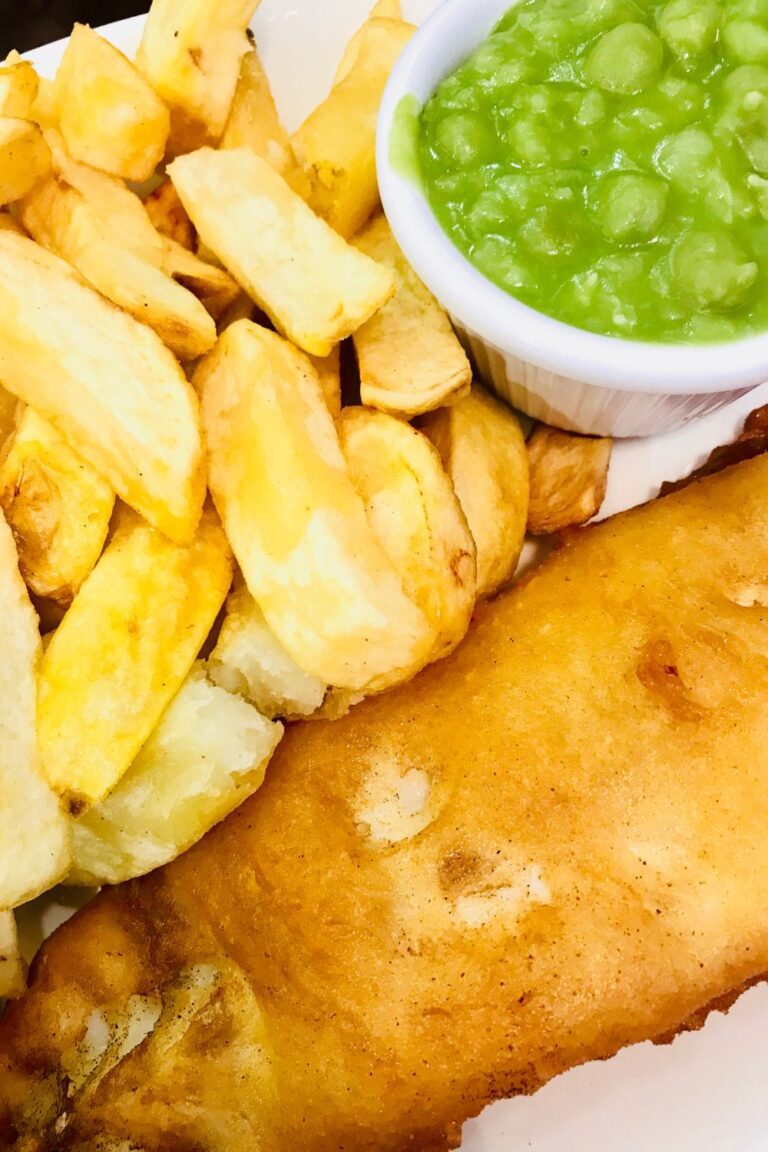
BUT, when the classics are done right, they are tasty, hearty, and very filling! And these days, we really know how to elevate classic dishes into refined gastronomic experiences. I’m taking Sunday roasts with tender slow-cooked joints with rich gravy poured over, and fresh cod or haddock cooked in crispy golden batter with thick triple-cooked chips doused in salt and vinegar.
But yeah, saying that you really can’t beat comfort foods like beans on toast or a good crisp butty!
Start off strong and fill up on the classic Full English Breakfast. It consists of a few rashers of bacon, a couple of sausages, fried eggs, black pudding, fried mushrooms, grilled tomato, baked beans, and a few slices of toast! Most places also do a veggie version.
Beans on Toast
Just when you think you haven’t had enough beans from your full English breakfast, try the luxurious lunch that is beans on toast! Americans just can’t get their heads around why this is such a great dish, but for us Brits, it’s a staple that you can have for any meal of the day! Cook your beans in a pan, heavily butter your Warbies toastie toast, and even grate some cheese over. Perfection!
Fish and Chips
Finish your day off by trying our most famous dish, fish and chips! But be warned, many pubs and touristy chip shops are mere imitations. For the authentic experience, you need to go to a proper “chippy”, preferably in some post-industrial town up north.
For the complete experience, mix and match your chips with a pie, mushy peas, gravy or curry sauce and a can of dandelion and burdock. All of this should be doused in salt and vinegar and wrapped in paper, and you’re good to go! Enjoy!
Here are a few more must-try dishes:
Whilst those are some of our favourites, there are a whole bunch of those amazing foods to try when you’re visiting these shores, and a proper UK travel tips guide would be lacking if we didn’t let you know about them! Give these other classic dishes a try:
These are lovely home-cooked classics, which are made with gravy-coated minced meat topped with creamy mashed potato and a crispy top.
This might surprise you, but being a diverse country with an, ahem, interesting world history, CTM is considered by many to be our national dish. We just can’t get enough of a good curry in Britain, and this dish in particular is the most popular and considered by many, myself included, to be a go-to comfort meal.
Plus, there are great veggie adaptations, including paneer, which, actually, is my usual order with a garlic Naan and mushroom rice.
Grab two pieces of buttered white bread, stick on some tangy cheddar (maybe with a bit of Branstons or pickled onion), and combine with a generous helping of crisps of your choice.
Personally, I love to double down and use cheese and onion! Give it a bit of a smush down, and mate, your life will be forever changed for the better! Trust!
Now this is my favourite dessert! It’s a moist sponge cake made from dates and coated with rich toffee sauce. I personally love it when it’s served with custard, but most people will choose to have a scoop of ice cream.
7. And Don’t Forget to Try a Meal Deal!
Speaking of food, one of the greatest inventions known to man, the humble meal deal, is kinda a big deal in the UK. Head to any supermarket and they’ll have their own version, hell, even Boots the chemist does one and it’s lowkey the best! You’ll also find meal deal–style combos in plenty of high-street chains too, from Pret and Greggs to WHSmith at the train station.
These are super cheap, we’re talking between £3-£5 for a combo including a main meal (usually a sandwich, wrap or pasta), a snack (crisps, chocolate bar, fruit, cake or humus dip) with a drink (water, fizzy drinks, fruit juice, Red Bull, sometimes a coffee). So if you’re looking for UK budget travel tips, then this is a good shout.
The food on offer is usually pretty good too, and there’s often a good selection on offer as it’s a competitive market! So if you’re looking for something cheap, filling, and tasty on your trip, make sure to hit the shops before the lunchtime rush. When it comes to UK travel tips, this one’s basically a secret hack to not starving to death in London!
We’ve used the Osprey Farpoint/ Fairview for all our backpacking adventures over the past 5 years and highly recommend them!
The main area of the pack opens like a suitcase, which is great for using packing cubes to keep everything organised and they even come with a detachable day pack!
Football is practically a religion in Britain; in fact, you could with some confidence say it’s our main form of worship. Rather poetically, it captures the emotions of people from all backgrounds and walks of life into a nail-biting 90 minutes of pure ecstasy or devastation!
It’s not just a game here; it’s part of our national, regional, and civic identities. Friendships, marriages, and even families are torn apart each week as our teams go head-to-head for bragging rights in the office come Monday morning!
Experiencing a live game of football is the ultimate way to understand the complex psyche of us Brits. Now, grabbing tickets for the likes of Arsenal, Liverpool, Manchester United, or just about any Premier League team is going to be almost impossible unless you’re willing to shell out a ton of money or get lucky and know the right person.
Instead, I recommend heading to a Championship, or League 1 or 2 game. These are miles cheaper, have a more local crowd and authentic raucous atmosphere, and it’s super easy to get tickets.
Another great option is to support the ever-growing Women’s game in the UK. The highest level is the Women’s Super League (WSL), and many of the traditional big teams play in this league in big stadiums. It’s just as good to watch as men’s football, with the competition being fierce.
Now you’ll have a new team to disappoint you week in week out! Also, make sure to have a pie and a Bovril at half-time!
If it’s the off-season or you can’t get tickets. Then consider at least taking a stadium tour to get to know some of the unique history and culture surrounding the teams here.
Oh and if you’re after the real deal when it comes to UK travel tips – support Arsenal man! Or at the very least don’t choose Spurs and do yourself dirty like that fam!
So, you know about the different countries that make up the UK, but within each is a myriad of different accents. Some are musical and joyous, others, well, you won’t be able to tell a word they’re saying, but in that way!
The UK is hugely diverse linguistically; we have accents that change hugely within a few miles. London itself has a huge variety of accents from RP to Cockney, Estuary English, and Multicultural London English.
So when it comes to UK travel tips, what I am saying is you’ve got to get acustomed to the way real Brits talk outside of films and TV, innit bro! Maybe watch a few Stevie G interviews or something to prep for your trip to Liverpool!
People from Liverpool, for example, sound completely different from the people in Manchester, and they’re only 30 miles away. Even the people from the two closest towns to where we live sound very different, as one is in Greater Manchester and the other is in Yorkshire.
Forget the King’s English you learnt at school or heard in movies! You might think you understand the language, but just wait until you’re trying to get directions off a drunk Glaswegian!
10. Prepare for Every Season
Now this is probably one of the most important UK travel tips. No matter what season you come here, you must, and I can’t stress this enough, prepare for 4 seasons in a day… especially if you’re up north!
The summers here can range from 40°C and blazing sun (bear in mind we have no AC and our houses are heavily insulated!) to a soggy 12°C, thick cloud and constant rain… and that’s just on one afternoon!
You’ve reached UK pro level when you combine shorts with a waterproof jacket! Image: The Roaming Renegades
Winters are usually cold, but they can swing from weeks of rain to crisp, frosty, clear days overnight. Snow is also pretty common in northern areas, especially Scotland.
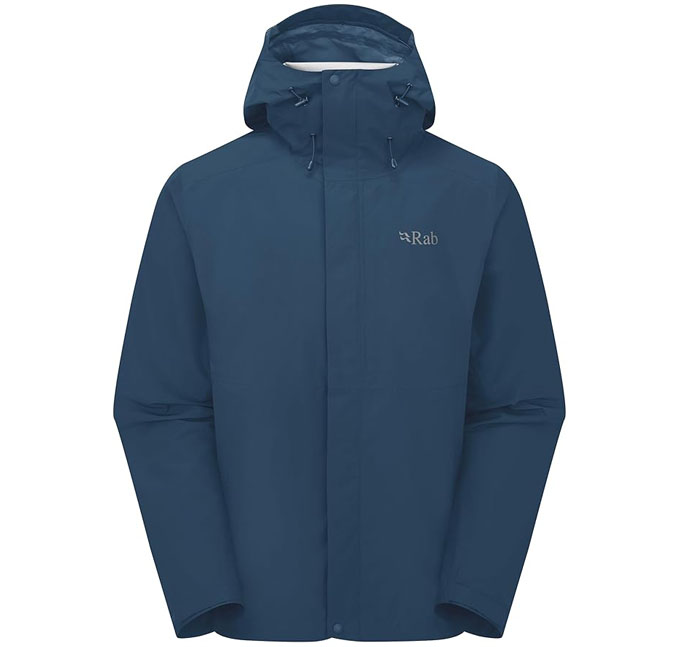
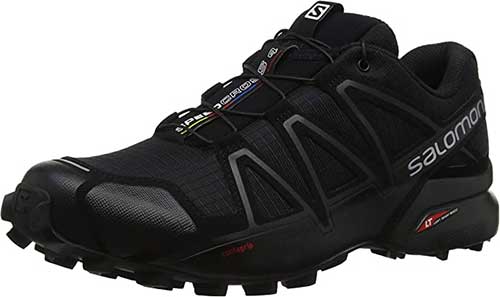
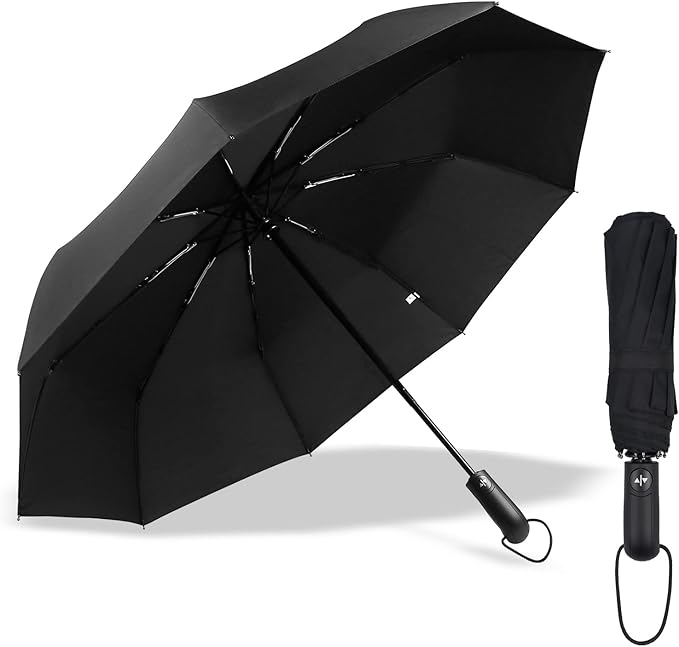
Basically, the weather in the UK can be very unpredictable! So make sure to pack layers. Definitely bring a good waterproof jacket, and even consider bringing an umbrella! Decent walking boots are also a must for hiking in the mountains.
But overall, my biggest tips for holidaying in The UK would be to prepare for the weather so it doesn’t ruin your trip!
Below I’ve put together some brief packing tips for UK travel –
This is essential when travelling to the UK, as the weather is so unpredictable. These are lightweight and pack down really small so you won’t need to make much room for it.
Essential Things to Know Before Travelling to the UK
Before you plan your visit to the UK, here are a few things you should do and know before travelling.
Visa Requirements
Most visitors travelling to the UK will require either an electronic travel authorisation (ETA) or a standard visitor visa, but it will depend on your nationality and/ or purpose of visit.
Travellers from the EU, US, Canada, Australia, and New Zealand are in the ETA category, which is similar to the ESTA in the US.
You should always be sure to check the UK Gov website for up-to-date info.
We all need visas for various destinations and organising these can be a nightmare and ruin the trip of a lifetime! Don’t be caught out and make sure you choose a professional service for your next trip and head off without worry.
In the UK, we use the pound sterling (£). Otherwise known as the “Quid”.
Cash and cards are pretty well accepted across the country, as is Apple Pay and contactless. However, since COVID, you’ll find some city centre businesses, often restaurants, only accept card payments. Equally, most takeaways, chippies, and some small shops will be cash only. So it’s good to have both on hand.
ATMs are common, and most should not charge. Be aware of using ATMs in small corner shops as they often add fees, and instead stick to those affiliated with large banks. Petrol stations, larger post offices, and most supermarkets will have free-to-use ATMs.
Scottish and Northern Irish notes, whilst technically legal tender, can often cause confusion or outright refusal in England! Similarly, a £50 note is often greeted with scorn and mistrust, and many businesses will not take them. In fact, they’re pretty uncommon, and I only saw my first one at age 28 in Turkey! It’s much better to ask a bank or post office to change them for smaller notes.
Transfer Your Money Abroad Or Grab An International Card
In the early days of travel we would get a stack of money out and carry it with us… It wasn’t the best way to avoid a disaster really, but getting constantly stung by ATM fees wasn’t much better,
Now we have Wise and, phew, things have CHANGED!! With our Wise account we can keep money in multiple currencies as well as withdrawing cash and paying by card without paying transaction fees. Plus, if you work online like we do, then it’s a fantastic platform for payments.
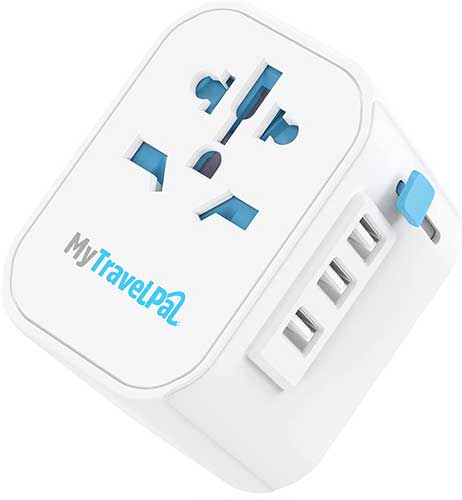
In the UK, we use the world’s best plug system! I’m not exaggerating, our type G plugs and sockets are over-engineered to within an inch of their lives! They’re a thing of beauty, alright, and if you stand on one by mistake, well, let’s just say they make Lego look like child’s play!
But basically, for the vast majority of the world, you’ll need an adapter specifically for the UK. So make sure you grab a good quality one with USB sockets before you travel. It’s one of my biggest tips for travelling to the UK, because they can be a pain to get hold of outside of London.
Fortunately, we don’t need an adapter when we cross over into Wales! Image: The Roaming Renegades
Get Connected
When travelling to any country, one of the first things you should do is get connected. It makes it so much easier when you arrive, as you can easily do things like check the exchange rate, book an Uber, get on maps, or even check the weather… and you’ll see that yes, it is raining tomorrow in the UK!
We recommend getting an eSIM as it’s so much simpler and way less hassle than trying to find somewhere in the airport that sells SIM cards. You can get one of these and install it before you’ve even set off, and as soon as you land, switch it on and you’re connected!
They also have so many great deals on data amount and length of plan. We use Nomad as they tend to offer the best packages for the most affordable prices.
If you don’t fancy getting an eSim, then fear not, because there are a few other ways to stay connected whilst visiting the UK. Heading to places like the nearest library is always one of my travel tips for the UK. I give new visitors, but that’s not the only way.
When you arrive in the UK, you’ll be able to find plenty of phone shops and stalls that sell SIM cards. The best companies to look out for are Vodafone, EE, and Three, plus cheaper options like GiffGaff. Or those specialising in overseas calls, such as Lycamobile or Lebara.
These will offer the best deals and have the fastest data.
Free WiFi is pretty common across the UK, and there are a bunch of different places to find it outside of your accommodation.
This is ideal even if you do purchase a SIM or eSIM to keep your data from running out when you’re uploading that 13 minute long video of the Changing of the Guards at the Palace that only you Nan is interested in!
Some spots to find free WiFi include:
Public libraries
Council buildings with public access
Transport hubs
Hotel lobbies
Cafes and restaurants.
Personally, I love a good library in a city centre for escaping the weather or noise or catching up on some work.
Is the UK a Safe Place to Visit? Here Are Some Travel Safety Tips!
Although the UK is generally a safe place to visit, there are still a few things to be aware of during your travels. These are my main travel safety tips for the UK.
Watch Out for Pickpockets
Pickpockets aren’t hugely common throughout the UK, but you should always keep a close eye on your valuables, especially in crowded tourist areas like parts of London, Edinburgh, and on public transport or transport hubs.
When it comes to tips for UK travel, you should consider keeping valuables out of sight in a zipped-up bag and your phone and wallet in a zipped pocket if possible. Or better still, get a Pacsafe bag or a crossbody under-shirt bag.
Thieves are now operating in large cities like London on mopeds and e-bikes, and are targeting people who are on their phones. In fact, this is by design, so your phone is already unlocked!
They will ride past at high speed and snatch your phone from your hand without you having the chance to even react.
Tips to Avoid Phone Snatching:
Stand away from the curbside and closer to buildings.
Hold your phone with a firm grip in two hands at all times when checking maps, texting, or taking photos.
If possible, try to avoid using your phone in crowded areas.
Try using headphones and, even better, AirPods when navigating so you can keep your phone concealed.
So, if you’re wondering, is England safe to visit? Yes, but in London, be extra careful with your phone.
Watch Out for Traffic…We Drive on the Left!
Here in the UK, we drive on the left… the only side that makes sense, let’s be honest!
But alas, much of the world seems to disagree, apart from the sane countries like Australia, Japan and Thailand! But that means for many visitors, who are often from the US or EU, it’s an unfamiliar experience whilst travelling in Britain.
This isn’t just an important consideration if you happen to rent a car, but as a pedestrian, you’ve got to remember to look to your right in particular when crossing the road, even at designated crossings.
Our emergency numbers are 999 or 112; these are for emergencies only, though. And in fact, it’s a criminal offence to abuse them.
If it’s not an emergency but you still need medical advice, you can call 111 – the NHS helpline. It is available 24 hours a day and is answered by highly trained advisors.
If you need to contact the police and it’s not an emergency, you should call 101.
Only Use Licensed Taxis or Trusted Apps
One of the things you’ll notice in the UK, especially in city centres and London, is our famous black cabs (officially a Hackney Carriage). These are actually the only taxis you can legally hail/ flag down. If the light is lit, then the cab is available.
Other taxis are “private hire mini cabs” which can be literally any type of car and will often have phone numbers, company logos and a light on the roof (Importantly, it won’t say taxi, but usually the company phone number). These MUST be prebooked by phoning the company they’re associated with. If they pull over and pick you up, they’re activating illegally.
You must make sure every cab you get in is licensed. A great way to do this is using taxi firms with personal recommendations/ good reviews or booking via apps like Uber or Bolt. This is one of my biggest tips for travelling alone in the UK, or in a couple.
Even though the UK is a pretty safe place to travel, you must always make sure to take out good and reliable travel insurance in case of any mishaps. I mean, you never know when you might need to rely on the NHS! My biggest travel insurance tips for the UK are to get extensive cover from a reputable company before you travel, just in case!
Travel insurance is one of those annoying things that no one likes to think about, let alone pay for, when you’re planning your next trip. It can also be bloody annoying as a backpacker/long-term traveller to find affordable coverage that meets the itinerary-less lifestyle (*cough* World Nomads *cough*).
So instead of getting subpar travel insurance, now we just always go with SafetyWing. It takes like 5-10 minutes to purchase your policy and essentially functions as a monthly subscription plan with near-global coverage!
Transport Tips and Tricks for Getting Around the UK
If you are visiting the UK and not just London (which you should do!), you’ll need some transport to help you get around.
It can be quite expensive, unfortunately, especially if you’re travelling by train, which is a sore point for us Brits. But that’s just one of many different methods of transport, and I’ve got a few hacks up my sleeve to share with you too.
By Bus/ Coach
Travelling by coach is by far the cheapest way to travel in England and the rest of the UK.
An important linguistic fact to know is that in Britain, bus and coach mean different things. So if you’re asking for the bus or coach station, you might find yourself in the wrong place! A bus tends to mean local public transport in a city or town, kinda like the famous red buses in London that people use to commute to work on. A coach, on the other hand, is for longer journeys with limited stops and will be much more comfortable.
The main companies covering long-distance and intercity coach travel in the UK are National Express, Mega Bus and Flix Bus. Many of these not only travel to cities, but also to smaller towns and also have special services for festivals, theme parks or one-off events.
Booking well in advance can get some incredible deals, and MegaBus in particular are famous for its low fare offers. It’s worth using comparison sites like 12Go or BusBud to search and book well ahead of your trip to get the best prices.
Being flexible here is also key to saving money, and avoiding school holidays is also a good idea for keeping costs down.
Travelling by train is my favourite way to get around, but unfortunately, in the UK, it’s pretty overpriced and booking in advance is highly recommended unless you want to get right royally ripped off!
Train travel is the perfect way to get around, but in some places, especially the UK, it can be expenisve!
Get yoursef on Omio for cheap tickets! They offer tickets across the globe, so it’s easy to book and organise your trip and have it all right there on your phone before you go.
I have also found it to be the best place for getting cheap UK train tickets too.
This is when new tickets are released and the best fares sell out FAST. Prices also increase incrementally according to availability and sales.
Get online and book 3 months before your trip.
Booking online via Omio allows you to easily check which trains are cheaper and unlocks advanced fares for even last-minute journeys, as it locks you into a specific train rather than the usual open ticket you’ll buy as a walk-up to the station.
Speaking of which, this is pretty much guaranteed to have you paying the highest fare for the route! For shorter journeys, it’s not the end of the world, but if you’re planning to go from, say, Manchester to London, you might just pass out when you see the price!
Railcards offer you ⅓ off railfares and visitors from outside the UK are eligible for them as long as they fit the criterion for each one (16–25, 26–30, Senior, Two Together, Family & Friends, etc.)
You can check out prices and different ones available on Trip HERE. <
Peak times – Mon–Fri mornings 06:30–09:30 and evenings 16:00–19:00 are even more expensive to travel within, so avoid if you can.
If Omio isn’t giving you the price you want, have a look at Trip or book directly with the train operator.
Split ticketing takes advantage of the strange and complex fare rules in the UK, often involving country borders and other boring stuff. Basically, going to A-B might be expensive, but breaking down the fare into separate tickets (even if you don’t get off the train) often results in much cheaper tickets.
Omio does this automatically on most occasions, but you can also check sites such as TrainSplit or Split My Fare to see if you’ve got the best price.
The BritRail Pass can only be purchased before travelling to the UK and is for non-UK residents only. It offers unlimited travel for the duration it’s purchased for on a wide range of local and long-distance services across England, Scotland, and Wales.
You can buy them online before your trip
Domestic Flights
Flying domestically in the UK (apart from over to Northern Ireland) isn’t hugely common, given the size of the country and is often wrongly seen as an expensive way to travel.
However, it’s always worth checking because you’d be surprised that sometimes it can be cheaper than travelling by train and a good option if you’re covering longer distances like London to Edinburgh or Manchester to Newquay.
For example. I just looked now, and by using Skyscanner to search around, I found flights from London Gatwick to Edinburgh for £20 each with Ryanair! The train is never gonna be that cheap!
Renting a car is the ultimate way to see the UK! This gives you the ultimate freedom to get off the beaten track and visit some smaller towns and villages up and down the country.
Plus, many of our mountain, national parks and beaches, like The Lake District or the Pembrokeshire Coast, have shockingly bad public transport, which makes it hard to access without your own transport.
Car parking is also pretty common at accommodations, especially outside of the cities, but always double-check first.
You should also remember we drive on the left and insurance is a legal requirement. Check the legalities of your license before travelling and whether you need a 1949 International Driving Permit (IDP).
It’s also worth checking out additional cover from places like RentalCover.com that covers your excess in the event of an accident.
Which leads me nicely into campervan hire. As I said above, having your own transport in the UK is a must if you plan on hitting up the national parks and more remote beaches. But a campervan, well, you’ve hit the jackpot!
We love camping in the UK, and there are a large number of campsites for those in a van. However, these do tend to be centred more around traditional “holiday” areas, beach towns and national parks rather than how widespread they are in Australia and New Zealand. But it’s still the best way to see the UK.
Free camping is technically illegal, but pulling into a layby, car park, or roadside spots for the night in a quiet area away from residential buildings is a grey area many exploit if they are self-contained, discreet and respectful. But be aware, rangers may move you on if you’re within a national park.
Loading search form…
Resources for budget campervanning:
One of my best campervan travel tips for the UK is to use these resources and ideas. If you’re looking for budget and free places to stay each night, they could save you some valuable ££.
Run by schemes like Motor Caravanners’ Club. Offer basic facilities for as little asl £10/night.
A network of pubs, vineyards, and farms offering free overnight stays (usually in exchange for being a paying customer). You can buy the guidebook for around £28.
A community-based app where users share legal and tolerated overnight spots where they’ve stayed.
Many countryside pubs and farms welcome campervans if you’ve bought food or drink.
Check local bylaws, but some allow short stays and even overnight stops; some do have strict time limits or fees.
Getting Around London
London is its own world when it comes to transport and is miles ahead of the rest of the UK (though, we are getting there in Manchester with our Bee Network, it has to be said!)
Note:
TfL, or Transport for London, runs all public transport on the same network and pay system. This includes the London Underground (Tube), Buses (the famous red ones), Thames Clippers, London Cable Car and other light railway services (DLR, London Overground, Elizabeth Line)
National Rail services (like Thameslink, Southern, South Western Railway, etc.) aren’t run by TfL, though many accept Oyster/contactless in Greater London zones.
All this makes it super easy to get around London, and it’s pretty cost-effective too.
You can pay by either just tapping your card/ phone on the gates, buying an Oyster Card (and topping that up), or buying a travelcard (unlimited travel for 1 Day, 7 Days, 1 Month, or longer loaded onto an Oyster or paper ticket).
The London Underground makes it super easy to get around Image: The Roaming Renegades
Daily & weekly caps mean you’ll never pay more than the cost of a Day Travelcard or 7-Day Travelcard for the zones you’ve travelled in.
On trains, tap in AND tap out. On buses, just tap in!
If you’re unsure, it’s best to go to a larger Tube station (visitors centre) and ask for assistance; most stations have staff who are usually pretty approachable by London standards!
Best Time to Visit the UK
The UK is a great place to visit year-round, depending on your plans! Summer is great for hitting the beaches, Autumn is ideal for hiking our most amazing trails, whilst spring is perfect for city breaks, and winter is a Christmas wonderland.
But be warned! The weather is SERIOUSLY unpredictable, so whatever you do, pack your rain jacket just in case!
June – August
This is the best time to visit the UK when it comes to the weather. Whilst it can still be unpredictable, it’s going to give you the best chance of sunshine and less rain!
The days are also long during this time of year, giving you more time to explore.
However, it can get surprisingly hot (and for some reason, heat does hit differently here, even my Aussie mates say so!) and humid, and AC is pretty uncommon outside of larger hotel chains. The Tube, for example, is a sweatbox on wheels!
It’s also much busier and more crowded, especially during the summer school holidays. Which means more expensive accommodation and potentially booked-up transport.
Coastal regions can get very busy, particularly Cornwall and Brighton.
Midges in rural Scotland are also on a warpath to consume unsuspecting visitors!
March – May and September – November
The perfect time of year to visit the UK, which covers most bases, such as decent weather for hiking or exploring cities without being too hot or stuffy. You’ll also find there are fewer tourists (though London is always popular) and cheaper prices. Just be sure to avoid bank holidays and school holidays like Easter.
The weather can be pretty erratic, though, and it’s not unusual at either end, so March and November, to see snow! Which can be pretty cool. Equally, the weather in May and September can be absolutely amazing… or abysmal! But this is the UK. What do you want?
December – February
Generally speaking, winter is the off-season in the UK. You’ll find pretty cold conditions, and often there will be snow in more northerly areas. But later into winter, you’ll often get lovely sunny, frosty, crisp days ideal for countryside walks.
Though London and, to some extent, other cities with big Christmas markets and New Year’s celebrations like Manchester, Edinburgh and York experience a second high season in the run-up to Christmas and into early January. But these are great to visit during this time, I can’t lie.
Be sure to pack warm clothing and wear layers you can shed easily (because shops, transport and restaurants tend to be heated to unhinged levels). Warm and waterproof boots will also make your time much more enjoyable.
Hiking in the mountains can be dangerous at this time of year, and many routes require more specialist equipment and experience. The days are super short, so you’ll have less daylight for outdoor exploration.
But it’s the perfect time of year if you like to settle in by the fire and get cosy.
So See Ya Later From the Land of Pubs, Peaks, and Proper Chips!
Alright then, cock (a northern term of endearment, get your mind out of the gutter!), we’re just about done with this bumper UK travel guide.
I could give you a series of goodbyes and then kick the conversation back up as you’re just about to leave by mentioning what Julie from across the road has been up to, but I don’t know if you’re quite ready for Mancunian levels of neighbourhood gossip just yet!
But hey, you’re planning a trip to our home country and, well, I’m buzzin’ for you!
Yeah, we might complain about the weather and inexplicable, self-destructive politics, waiting 6 months to see a doctor and the scandal of the price of Freddos, but you know what, it’s alright here…
And you’ll soon get to know that when a British person says “it’s alright”, they might well have just had the most incredible experiences of their lives. We’re pretty understated when we’re sober and not at the football!
As much as I love to travel, I also love returning home to the green countryside, unique humour, grimy streets of Manchester, mountains of the Lake District, dramatic cliffs of Wales, and of course, salt & pepper chips from Fat Panda, paneer Masala from Thamin and a packet of Walkers Thai Sweet Chilli Sensations with my can of Irn Bru!
Right, kettle’s on, time for a brew! Hope you’ve enjoyed this Great Britain travel guide, and we look forward to seeing you.
A few people have asked us recently how they could help us out on our travels, so we thought we’d add our very own tip jar for those who can’t support us by clicking through our affiliate links.
We work hella hard on this site to bring you all the most epic and up-to-date travel info from around the planet. So if you’ve enjoyed what you’ve seen, then we’d appreciate anything, no matter how small, you can contribute as a thank you.
Above all, thank you for being here and reading our content, it means the world to us.
In the UK, it’s not required to tip as staff are paid at least minimum wage and usually the living wage. However, if you feel that the service has been good, then leaving a tip of between 10 – 20% of the total bill is normal. Some establishments (more common in London and larger cities) have a service charge already added to the final amount; usually, this can be asked to be taken off if you don’t feel like the service has warranted it.
The shoulder seasons (March – May) and (September – November) are the best times to visit the UK. If you visit during these months, there will be fewer crowds and cheaper prices on accommodation. The weather can still be great, and if you’re lucky, it might not rain.
Before travelling to the UK, you must make sure to pack a good waterproof jacket as it will likely rain. You should also consider bringing a good pair of walking shoes, as there are so many amazing hikes throughout the UK. Make sure to also bring layers, as the weather can be very unpredictable.
Yes, London is one of the most expensive cities to visit in Europe, but there are still plenty of free things to see and do. Visit the British Museum, National History Museum, and even wander around Camden Market. If you are still finding it too expensive, then head up north where everything is much cheaper and people are a lot more friendly.
For transparency’s sake:Many of the links we have on our site are affiliate links. This means that when you click one of these links and make a booking or purchase, for example: accommodation, gear, insurance or transport, we earn a small commission (at no extra cost to you).Also, know that as an Amazon Associate, we earn from qualifying purchases. Most importantly, know that we still only recommend services, gear and products we believe in and our earned commission helps us keep travelling and bringing you high-quality posts and content.
Yo, I’m Nic (they/them), one-half of The Roaming Renegades.
I’m an adventure (and halloumi) obsessed traveller with a passion for hiking mountains, exploring cities, watching Arsenal win, moshing out to Rammstein in random European fields and getting hopelessly lost on a motorbike somewhere in Asia! I am also a proud member of the LGBT+ community.
I’ve explored 80 countries, lived in Australia and New Zealand, and spent months wandering Southeast Asia, South America and Eastern Europe, all while trying to avoid growing up!
Did it work? I dunno, but my back hurts, and I still collect Pokémon cards! Who wants in?!
We value your privacy. We use cookies to improve your experience on our site. By using our site, you consent to cookies.
This website uses cookies
Websites store cookies to enhance functionality and personalise your experience. You can manage your preferences, but blocking some cookies may impact site performance and services.
Essential cookies enable basic functions and are necessary for the proper function of the website.
Name
Description
Duration
Cookie Preferences
This cookie is used to store the user's cookie consent preferences.
30 days
These cookies are needed for adding comments on this website.
Name
Description
Duration
comment_author
Used to track the user across multiple sessions.
Session
comment_author_email
Used to track the user across multiple sessions.
Session
comment_author_url
Used to track the user across multiple sessions.
Session
Statistics cookies collect information anonymously. This information helps us understand how visitors use our website.
Google Analytics is a powerful tool that tracks and analyzes website traffic for informed marketing decisions.
Used by Google Analytics to determine which links on a page are being clicked
30 seconds
_ga_
ID used to identify users
2 years
_gid
ID used to identify users for 24 hours after last activity
24 hours
_gat
Used to monitor number of Google Analytics server requests when using Google Tag Manager
1 minute
_gac_
Contains information related to marketing campaigns of the user. These are shared with Google AdWords / Google Ads when the Google Ads and Google Analytics accounts are linked together.
90 days
__utma
ID used to identify users and sessions
2 years after last activity
__utmt
Used to monitor number of Google Analytics server requests
10 minutes
__utmb
Used to distinguish new sessions and visits. This cookie is set when the GA.js javascript library is loaded and there is no existing __utmb cookie. The cookie is updated every time data is sent to the Google Analytics server.
30 minutes after last activity
__utmc
Used only with old Urchin versions of Google Analytics and not with GA.js. Was used to distinguish between new sessions and visits at the end of a session.
End of session (browser)
__utmz
Contains information about the traffic source or campaign that directed user to the website. The cookie is set when the GA.js javascript is loaded and updated when data is sent to the Google Anaytics server
6 months after last activity
__utmv
Contains custom information set by the web developer via the _setCustomVar method in Google Analytics. This cookie is updated every time new data is sent to the Google Analytics server.
2 years after last activity
__utmx
Used to determine whether a user is included in an A / B or Multivariate test.