So, you’re thinking about a trip to the Philippines – I betcha it’s that clear blue water, white sandy beaches, and lazy days bobbing on the ocean that’s got you all excited, am I right?!
Well, if it is, you’ve come to the right place, because this magnificent country offers that in spades, all encased in a Jollibee-flavoured wrapper of joy!
But here’s the thing – while the Philippines might look like paradise (and for the most part, it absolutely is), there are a few important factors to bear in mind before you travel.
From safety considerations and weather implications to transport challenges and dodgy WIFI connections… this in-depth Philippines travel tips post covers all the angles you’ll need to make the most out of your trip. Avoid any unnecessary surprises that might throw a spanner into the engine of that perfectly running Jeepney with this handy guide to visiting the Philippines.
Right then, we’ve got no time to lose because I don’t know about you, but I could realllly do with sitting on a beach in El Nido with a coconut right about now! Let’s gooooo!
Alright then, folks, let’s get this show on the road cus I’m mega excited to share all my top Philippines travel tips with ya’ll because this is such a special country to visit.
I’m gonna break down a few things to know about the Philippines first, before getting into some of the more practical tips later on.
1. English is One Official Language of the Philippines
Whilst the main language of the Philippines is Tagalog (Filipino), English is widely spoken, especially in most areas you’ll likely visit. As it’s one of the official languages of the country, it’s widely taught, spoken and understood.
This means that communication is really easy, and alongside the fact that Filipinos are a friendly and approachable bunch, it makes communication low-stress. Plus, it also makes connecting and getting to know locals feel much less difficult.
You’ll often hear what’s commonly called “Taglish”, a crossover between Tagalog and English amongst locals, which, personally, I find really fun to listen to. This is even more common in places like Manila. Keep an ear out!
I’m not going to go into a crazy level of detail, but I probably should chuck in that Tagalog (Filipino) is just one of over 180 regional languages in the Philippines. It was chosen as the basis for the national language (Filipino) to unite the country linguistically, as it was the language of the area around Manila. Today, most people in fact speak three languages: their regional language, Tagalog and English! Pretty impressive.
Having said all that. It’s always a nice idea to learn a few words and phrases as a way to better connect to the local culture.
One of the things to know before going to the Philippines is how to express politeness.
Tagalog uses “po” to signify respect and is often added to words or in sentences when speaking to elders, strangers, or service staff, for example.
For example:
Salamat – Thanks
Salamat po – Thank you (polite)
As a traveller, it’s best to use the polite form, but if you forget, folks will just be happy you actually made the effort. So don’t sweat it too much, but it’s good to know.
Po also doesn’t always go at the end of the sentence, and it can take some practice to figure out exactly where to add it. The main rule is to tag it on after the main word or verb. Putting it in at the end of the sentence will always be greeted with smiles for sure!
So when it comes to tips for travelling to the Philippines, I’ve got a few useful phrases here.
Some simple Tagalog words and phrases:
Hello / Hi -Same as in English.
Kumusta (po)? – How are you?
Paalam – Goodbye (formal)
Sige, pa! – Okay, bye! (more informal)
Salamat (po) – Thank you
Salamat po talaga – Thank you very much
Paki-usap (po) – Please (for requests)
Oo – yes
Opo – yes (polite)
Hindi – no
Magkano (po) ito? – How much is this?
Saan (po) ang banyo? – Where is the bathroom?
Tulungan mo (po) ako – Help me
Pwede? – Is it okay / can I?
Pwede po? – Polite version (use this a lot!)
2. Island Hopping in the Philippines is So Much Fun!
Now, this is what you’re here for, right!? The Philippines is all about the water activities and taking some island hopping tours that explore the many rocky lagoons and secret beaches of places like El Nido, Coron, Siargao, or Cebu is what it’s all about.
Embrace the coastal life and get yourself in the water! The Philippines really isn’t a destination for those averse to leaping right in. Here, the water is warm, the vibes are chill, and a day spent onboard a less-than-stable wooden boat in paradise is what I call living the dream.
Grab your bathers, throw on that snorkel mask and remember some decent sunscreen!
In the Philippines, cash is still the most common way to pay for most items, and they are pretty old school when it comes to card payments. This means you’ll have to carry quite a bit of cash at all times, especially if you’re outside of Manila.
Another layer of complications to this is that in smaller and more rural places, like visiting Coron, ATMs can be unreliable as well as few and far between. Make sure you carry enough cash for the time you’ll be spending in more remote areas and plan ahead in case you run out.
Carrying smaller notes is best, as sometimes changing larger denominations can be difficult. Be sure to also take extra caution when using ATMs, as skimming is common in the Philippines. Only use official bank ones where possible, and always inspect the machine beforehand.
A good way to avoid any transaction fees is to get yourself a Wise account and card before travelling. This is one of my biggest travel tips for the Philippines to save time and money.
Transfer Your Money Abroad Or Grab An International Card
Wise (The Artist Formerly Known as TransferWise)
In the early days of travel we would get a stack of money out and carry it with us… It wasn’t the best way to avoid a disaster really, but getting constantly stung by ATM fees wasn’t much better,
Now we have Wise and, phew, things have CHANGED!! With our Wise account we can keep money in multiple currencies as well as withdrawing cash and paying by card without paying transaction fees. Plus, if you work online like we do, then it’s a fantastic platform for payments.
I’ve touched on this in the language section of my Philippines travel tips, but this needs its own section because it’s one of my favourite parts of travelling here. Across all 80+ countries I’ve visited, I’ve found the Filipinos to be some of the warmest, friendliest, and most approachable folks in the world.
When the locals are so open to interactions, it just makes the whole travelling experience feel so much more wholesome and getting below the surface is something that requires much less effort.
I mean, just walking down the street in Puerto Princesa, we’ve been roped into basketball games, volleyball on the beach, beers on a boat and food back at home. Truly, some of the most wonderful memories we’ve made on the road.
When it comes to tips for the Philippines, I’d say, make sure to embrace the warmth of the people and make some new friends!
On that note, the Philippines definitely runs on “island time”, and things are, let’s say, slightly less organised than many of us might be used to (well, not if you’ve ever travelled on Northern Rail, but that’s another story!) This means that you should factor in and just downright expect delays when it comes to transport.
From planes standing still on the tarmac to ferries breaking down halfway through an 8-hour crossing, one of my biggest tips for travelling in the Philippines is to bring with you a generous portion of patience with a side helping of distractions!
So, that means, packing things like a book (or Kindle), some decent headphones, a battery pack and even a switch if you’re particularly neurospicy like me!
6. Don’t Rush – The Philippines was Made for Slow Travel!
See, now, when it comes to Philippines travel tips, this might lowkey be the one that makes or breaks your trip. Because let me tell you, if you don’t get your head around the fact that you can’t rush the Philippines, then you’re not gonna make the most of it.
As you might be aware, the Philippines is made up of around 7,641 islands, so moving around them can be a chore if you let it. If you embrace it, however, well, that’s where the magic lies. Rather than fighting against it, embrace it!
The Philippines is all about island life and embracing slow travel. Instead of rushing around, lazing on a sunny beach, water lapping at the shore, contemplating extending your stay yet again and swearing it will only be a few days extra this time… that’s where the Philippines will reel you in!
If you only have a set amount of time here, then you need to make sure you book your flights or ferries ahead of time, or it can get expensive and stressful quickly, and that’s not the vibe we’re going for here!
Oh, and another thing! Travel ain’t the only slow thing around here either, oh no, the internet outside of Manila is stuck firmly in the 1990s! I mean, sure, I got my hit of nostalgia having to go to an internet cafe (yes, they still exist here) to book flights, but if you’re looking for a top digital nomad destination, then this is probably one of the most important Philippines travel tips.
So, what’s the alternative? If you don’t want to spend your whole time in Manila (not recommended at all), then you’re gonna have to come up with a solution. That’s going to either be: frequented the previously mentioned internet cafes, which in reality are just full of young lads gaming, or getting yourself a reliable eSIM with an unlimited data package!
8. Pack Light for Easier Travel Around the Philippines
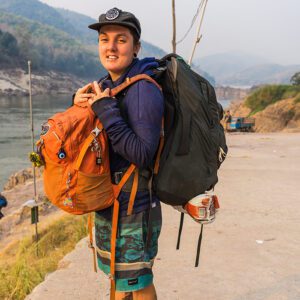
Now, then it comes to Philippines travel tips, this one is going to save you a whole load of hassle and backache! Travelling between different destinations in the Philippines can be a hassle, as we’ve previously established. That means jumping on some questionable planes and janky-ass boats, let alone trying to wrangle yourself on and off a jeepney with all your gear.
All this to say, packing light is your friend, mis amigos! Forget packing out those massive 30kg suitcases, that’s not going to fly here, quite literally. Embracing the backpacker vibe is going to make your life a lot easier and make packing light a breeze.
Grab a decent backpack that opens like a suitcase, organise your shiz using packing cubes and be as light on your feet as you can be. This will make jumping on and off boats, propeller planes and tricycles easy! You might even be able to save a few £$ by travelling carry-on only.
Our Favourite Backpacks
Osprey Farpoint/ Fairview
We’ve used the Osprey Farpoint/ Fairview for all our backpacking adventures over the past 5 years and highly recommend them!
The main area of the pack opens like a suitcase, which is great for using packing cubes to keep everything organised and they even come with a detachable day pack!
Sticking with the theme of aquatic adventures, here’s one of the most overlooked Philippines travel tips when it comes to spending time on and near the water. If there’s one thing you pack before leaving home, it’s a good quality dry bag you have a good amount of faith in!
Trust me, I travel with several expensive cameras (and take them on boat trips), a laptop, and of course, we’ve got our documents. A good dry bag (and some dry sacks) comes in handy when transiting on ferries as well as whilst taking island-hopping tours. I seriously wouldn’t get on a boat without one! Plus, they also come in super handy at the beach for keeping your change of clothes dry and sand-free!
Not all sunscreens are created equally, especially when it comes to protecting the fragile and precious marine life of the Philippines. Here, the clear turquoise waters are teeming with a kaleidoscope of colours, from stunning coral reefs to majestic sea turtles; it’s a literal real-life aquarium.
Now, if you’re going to be introducing your mankey, unwashed, backpacker self to this ecosystem, you’d better make sure you’re prepared and respectful.
Whether that means making sure to source sunscreen that protects the corals, avoiding touching anything, or keeping your distance from wildlife like turtles or whale sharks, we can all do our bit. Afterall, it’s this that drew us here in the first place, so we have a responsibility to protect it for future travellers and generations to come.
10 Essential Travel Safety Tips for Visiting the Philippines
A trip to the Philippines usually goes down without any major incidents, but that doesn’t mean there aren’t a few specific things you need to be aware of when it comes to safety.
Let’s take a closer look at some travel safety tips for the Philippines.
1. Know Where NOT to Go in the Philippines
Wondering, “Is the Philippines safe to travel to?” Well, that depends on where you go.
Most folks visiting the Philippines are gonna be headed for places like El Nido, Cebu, Siargao, Boracay, Bohol and probably Manila. These areas are generally very safe for visitors, though some caution is needed in certain areas of Manila.
However, there are areas of the country where there is a higher potential for civil unrest, kidnappings and terrorist attacks. Currently, the FCDO advises against all travel to western and central Mindanao and the Sulu archipelago. This is where most of the dangers in the Philippines exist.
Manila is a massive city and has many different areas, plenty of which suffer extreme poverty, deprivation, and crime. Whilst it’s generally pretty safe to visit, you should stick to the main areas such as Makati, Intramuros, Bonifacio Global City and Ermita / Malate.
When it comes to Manila travel tips, avoid venturing into Tondo, and take extra care for pickpockets in the markets around Divisoria / Binondo.
2. The Tap Water Isn’t Safe to Drink in the Philippines
Unless you want to have a literally shitty time in the Philippines, please, please, avoid drinking the tap water here! I mean, it’s all fun and games being out on the ocean in a rickety boat until you start feeling your stomach bubble, and all you’ve got going on is a bucket in a tiny 40 °C room sitch! That’s a hard no from me!
Sticking to the usual safety measures when it comes to drinking water is the best. So that means bottled or filtered water, avoiding ice and salads unless you know for certain they haven’t used tap water. If you’re super worried or predisposed to a bad stomach, then you could even go as far as not brushing your teeth with tap water, but we didn’t have an issue in that regard.
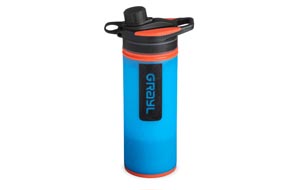
If you’re worried about single-use plastic bottles as a result, then the best solution is to get yourself a top-quality filter water bottle before you travel. I recommend grabbing a Grayl Geopress bottle, as the technology in these means you can safely drink the tap water without any worries.
Pickpocketing and petty theft can occur around busy markets, on public transport and when swimming at the beach. With the extreme poverty of the Philippines comes these types of opportunistic crimes, and the best way to avoid becoming a victim is to keep your wits about you and take some extra safety steps.
Make sure to wear a cross-body bag either underneath your clothing or fitting closely to your body. Even better, get one that has anti-slash technology, such as a PackSafe bag. Keeping other valuables in a zipped-up pocket is also a good idea.
You should also avoid flashing expensive gear (phones, camera, laptops) in busy or slightly sketchy public areas and take extra care when transiting or storing these in your room.
If you’re travelling to the Philippines alone, you should also be more vigilant when walking in low-lit areas at night and drinking in bars and clubs.
4. Renting a Scooter in the Philippines? Always Wear a Helmet!
Like much of Southeast Asia, hiring a scooter to explore and get around day to day is very common for visitors. I’m not going to get all preachy and act like your mum by telling you not to, because I’m guilty on all counts on this. In fact, I’d probably go as far as to encourage it, given the amount of freedom it gives you to see all the wonders of this beautiful country on your own terms.
BUT, what I will say is that there are certain things you can do to minimise the risk. The main thing here is to ALWAYS WEAR A HELMET. If there is one rule you stick to, please, let it be this. Sure, you should wear a shirt and proper shoes, but I’m a realist and can’t say I’ve never ridden a scooter in flip flops! Ya know, be an idiot, but not a complete moron!
Another thing I highly recommend is getting at least some training in before riding off into the sunset, only to end up in a rice paddy.
Scooters are easy enough to ride, but they do take some getting used to. We both made sure to get our CBT (compulsory basic training – for motorbikes) in the UK beforehand. This isn’t actually legal outside of the UK, so bear that in mind for insurance, but it will teach you at least how to safely ride and handle the bike.
5. Get Up to Date on Your Vaccines Before Visiting
Being a developing country, it’s best to check which vaccines you’ll need to be up to date with before travelling. Generally, this is going to be stuff like your Hep A, Hep B, Typhoid and Tetanus.
There is also a high rabies risk in the Philippines, and it’s not something you want to mess around with. From my experience getting booster jabs in Bali after a street dog licked a cut, I am so glad I had my vaccines done beforehand because it saved so much anxiety and money. Had I not had those, it would have potentially cost thousands instead of just over £100 (which my insurance paid back anyway) and been a mega stressful decision.
The sun in the Philippines is hella strong, and if you’re white af like us, then you’ll feel it! Even if you’ve been travelling around the region for a while, you’ll be spending much more time swimming and generally exposing areas of your skin you might otherwise have covered here due to all the water-based activities.
Make sure you bring some good quality, coral-safe sunscreen with you. Yes, you can buy it here, but you have to be super careful not to buy any that contain bleaches and skin whiteners. It’s also relatively expensive here to get sunscreen that stacks up to Western standards and might require a bit of a hunt to track down.
No one likes mosquitoes at the best of times, and while malaria is pretty low risk here for most visitors, dengue is rife all across the country – beaches, cities, jungles… It’s everywhere! The risk is also year-round, though it is significantly higher in the rainy season (June–November).
Make sure to wear long sleeves and pants in the evenings or whilst trekking through jungle areas. It’s also wise to bring a good quality mosquito repellent that contains DEET, as well as sleeping under a mosquito net every night.
8. Avoid the Philippines’ Taxis: Download Grab Instead
Taxi drivers the world over can be known for trying it on a little, and here is no different. Whilst many taxi drivers are just trying to make an honest living, there are a minority who are on the lookout for unsuspecting tourists to scam. I for one, ain’t got the time or patience for these fun and games!
Instead, download the online rideshare app “Grab”, it’s basically Southeast Asia’s version of Uber and has a bunch of different features built in that will keep you safe and protect you against not only scams, but also other possible mishaps and unsavoury situations.
9. Always Carry Hand Sanitiser and Tissues
Sanitation across the Philippines can sometimes leave a lot to be desired, and our pampered Western immune systems just aren’t set up to deal with the different germs and bacteria here. Do yourself a favour and carry some hand sanitiser. I’m not telling you to lather yourself in it every 10 seconds, but it’s useful to use after using public bathrooms and before eating.
Oh, and on that note, another bit of bathroom advice. Here (like many places in Southeast Asia), you’ll be hard pressed to find a public bathroom that actually has toilet paper! Yeah, there’s the ole bum gun, which is honestly great, but I’m not all that keen on a drip dry sitch, ya get me!
So if there’s one thing that I literally have in my bag or back pocket at ALL TIMES is a pack of tissues… which, if you didn’t take the first bit of advice, might be required more than you planned!
Between jellyfish-infested water, janky boats, jeepneys flying down the street, and just the general level of health and safety in the Philippines (Spoiler alert: it’s zero!), ya’ll better be sure you take out some good travel insurance before you go skippy merrily off into the chaos that is this beautiful but flawed country!
SafetyWing Travel Insurance
SafetyWing
Travel insurance is one of those annoying things that no one likes to think about, let alone pay for, when you’re planning your next trip. It can also be bloody annoying as a backpacker/long-term traveller to find affordable coverage that meets the itinerary-less lifestyle (*cough* World Nomads *cough*).
So instead of getting subpar travel insurance, now we just always go with SafetyWing. It takes like 5-10 minutes to purchase your policy and essentially functions as a monthly subscription plan with near-global coverage!
What You Need to Know Before Planning a Trip to the Philippines
Alright, so on this part of my Philippines travel tips guide, I’m going to run through a few more practical things you’ll need to consider before your trip.
Check Your Visa Requirements for the Philippines
Most nationalities enjoy visa-free travel to the Philippines if their stay is 30 days or less. Others are required to apply for an e-visa.
However, you’ll still need a valid passport with an expiry date at least 6 months after your arrival date. Proof of onward travel and a QR from a completed QR code to show that you have registered on the e-travel system within the 72 hours before your arrival in the Philippines.
If you plan on staying for longer than 30 days, then you can either apply for a longer visa before you travel or you can apply to extend your visa after you arrive.
Be sure to double-check on your government website whether you require a visa and whether there are any additional Philippines travel requirements, such as bank statements and proof of accommodation.
Sort Your Visa Out
Best Place to Organise Your Visa
We all need visas for various destinations and organising these can be a nightmare and ruin the trip of a lifetime! Don’t be caught out and make sure you choose a professional service for your next trip and head off without worry.
Local Currency, Prices, and Budgeting Tips for Travelling the Philippines
The official currency of the Philippines is the Philippine peso.
Currently £1 = 80.64 Peso and $1 = 58.92 Peso.
The Philippines is generally considered a very cheap place to visit by Western standards, and your money will go far here. But of course, it helps to set out a Philippines travel budget depending on how much cash you have for your trip.
Wondering, “How much money should I bring to the Philippines?” Well, I’ve put this handy table together just for you!
Philippines travel tips: Money
Accommodation
Dorm bed = £4 – £12 ($5 – $15 per bed)
Budget hotel = £16 – £32 ($20 – $40 per night)
Mid-range hotel = £32 – £47 ($40 – $60 per night)
A luxury hotel/ resort is £63+ ($80+ per night)
Food
Street food = £0.80 – £4 ($1 – $5 per meal)
Fast food = £3 – £6.50 ($4 – $8 per meal)
Restaurant = £4 – £9.50 ($5 – $12 per meal)
High end restaurant = £16+ ($20+ per meal)
Drinks
Bottled water = £0.16 – £0.80 ($0.20 – $1)
Bottle of Coke = £0.47 – £0.95 ($0.60 – $1.20)
Can of local beer = £0.80 – £1.65 ($1 – $2.10)
Imported beer = £1.20 – £2.80 ($1.50 – $3.50)
Transport
Jeepney ride = £0.16 – £0.40 ($0.20 – $0.50)
Long-distance bus = £6.30 – £8 ($8 – $10)
Short distance ferries = £4 – £6.30 ($5 – $8), Long distance ferries = £16 – £40 ($20 – $50)
Staying Connected in the Philippines: SIMs, Data, and WiFi
You’ll want to stay connected during your time in the Philippines, I mean, gotta make your mates back home in rainy Manchester jealous, right?! Beyond showing off, in all seriousness, wifi is pretty terrible, and you’ll need a reliable way to book onward travel, accommodation, grab cars and just general navigation.
There are a few different options available, and I’ll run down the positives and drawbacks of each in this section of my Philippines travel tips post.
It’s easy and very affordable to pick up a local SIM card; you can do so at the airport (where you might pay a little more), convenience stores, or from any of the little shacks along the road in pretty much any town or village.
There are various bundles and data options available, and most also come with the ability to make phone calls on a local number, too. However, whilst I’ve found the connection itself to be good on these, I’ve found that the data runs out a lot quicker than I imagined. I’m not quite sure if there’s something amiss with them or if I just hit Pokémon Go a little too hard!
The other issue with physical sim cards is that you’ve got to take out your own sim card and make sure to store it safely somewhere. This means if you need to access a text message from home, for say logging into a banking app, you’ll have to swap them back out! This in itself gives me anxiety! It’s also just another bit of single-use plastic the world could do without.
By far the most convenient solution is to grab yourself an eSim before travelling. Just download the app, select the amount of data and for how many days you’ll need it, and once installed, you’ll be connected from the second you land. This way, you can be off as soon as you land and not have to queue up for ages or rely on dodgy airport wifi.
They are easy to top up, should you need to, and you can even get regional ones if you’re travelling throughout Southeast Asia.
The WiFi isn’t great in The Philippines, but they do provide free WiFi in places such as Libraries, Cafes, Shopping malls and some public transport terminals, but it can be patchy at best.
Even in many hotels and hostels, it can be hard work to reliably book a flight or onward accommodation without ending up at an internet cafe. If you’re thinking about relying on free Wifi for working or organising your trip, then you might end up disappointed!
The BEST International eSim
Airalo
We all know the scene, right?
You arrive at an airport after a horrendous 12-hour flight at 6:00 am in a new country! There’s a sea of taxi drivers out for blood, and you realise you can’t connect to the airport WIFI to grab an Uber…
But you’ve got an eSim, so no worries! Boom!
Your phone is already set up with data before you land, and with Airalo you know you’re getting a good deal and reliable service across 200+ countries!
Use the code “AIRALOESIM10” for 10% off your first purchase
The Philippines is in a region that doesn’t have the standard four seasons many of us Westerners are used to. Instead, they have two seasons: rainy (monsoon) and dry.
I’ll be honest, the Philippines is somewhere you’ll want to visit during the dry season. The rainy season brings a lot of unpredictability and storms that can ruin many activities you’ll have planned, impact your beach time and cause delays to travel. This is even more so if you’re visiting the Philippines for the first time.
You want to be here when the skies are clear, and the sun is out Image: The Roaming Renegades
Let’s have a closer look:
Good for: This time is ideal for those looking to hit the beach, go scuba diving, island hopping or hiking with many clear sunny days and good underwater visibility.
Bad for: This is peak tourist season, so you’ll be looking at higher prices, more crowds and some accommodation and tour options might sell out quicker. Air and sea travel can also be more expensive and have less availability.
Extra info: March to May is the hottest time of the year, whereas December to February is cooler and more comfortable. Christmas and Easter are particularly busy with international and domestic tourists.
Good for: This time of year can be a mixed bag; you could get lucky and have amazing weather. The crowds do tend to start to thin, but everything will still be open and running as usual, often with slightly lower prices and more availability.
Bad for: Occasionally, you can run into bad weather, particularly the closer you get to the end of June. If you’re coming for a party atmosphere, then things might feel a touch quiet.
Extra info: Shoulder season is often seen as a “best of both worlds”, but it does come with an element of risk when it comes to weather!
Good for: Whilst it’s not called the rainy season for nothing, you’ll often find sunny mornings are common before the storms roll in. The masses of tourists have gone home, and you’ll find great deals on accommodation, tours and transport.
Bad for: As the name suggests, you’ll get rain and plenty of it! Even if it’s only the afternoons, it means you’ll likely have lots of rearranging to do, cancelled flights and rough ferry crossings. Some island hopping and boat trips might also not be running during this time of year, and typhoons are always a risk.
Extra info: If you’re set on visiting during this time of year, Boracay, Palawan and parts of Cebu receive less rain than the other popular destinations.
What to Pack For a Trip to the Philippines
Packing for the Philippines isn’t all that different to what you might want to pack for your average trip to Southeast Asia, but there are a few things you should take into consideration before zipping up that bag and scurrying for the airport.
Travelling to the Philippines: What to bring
A Compact Backpack
Travelling as light as possible is optimal in the Philippines with small planes, ferries and tricycles. We’ve used the Osprey Farpoint for the last 10 years of travel, and it’s the ideal companion for these trips as it opens like a suitcase and is easy to carry.
International Travel Converter/ Multiple Socket Plug
In the Philippines, they use a combination of US (Type A, B) and EU (Type C), so you should pack a good-quality universal converter to cover your bases. Ideally, one which allows both a plug to be used alongside several USB/ USB-C slots.
You’re gonna be spending a lot of time on the water, so you’ll want to get yourself a good quality, reliable dry bag to protect your valuables on the many, many janky boats you’ll find yourself on!
Make sure you’ve got yourself a GoPro so you can capture all your aquatic adventures. If you’re doing some SCUBA diving, then don’t forget to get yourself a dive case rated to the depth you’ll be diving to.
When you’re spending all day in the water, sunscreen only goes so far, and it’s easy to forget to reapply. Do yourself a favour and get an SPF rated rashvest to protect your skin from the harsh rays.
How to Get Around the Philippines: Top Transport Methods and Tips
Transport can be a little tricky when travelling around the Philippines. There can be several different methods to get around. I’ll break down how to travel in the Philippines with some essential info below.
Most international flights will arrive in Manila, especially if they’re arriving from long-haul destinations. From there, you’ll have to transit to other destinations such as Cebu, Palawan, Boracay and Siargao.
Cebu now also has direct international flights from places like Singapore, Seoul, Tokyo, Hong Kong, Dubai, and some Australian cities.
Domestic flights are a given when it comes to travelling around the Philippines, and this means you’ll have to plan ahead much more than you would in other places like Thailand or Vietnam, or things can get expensive and complicated. They are often pretty short, and some even use propeller planes!
Try to travel carry on only to save yourself some money.
There are various ferry routes around The Philippines, including long and short distances. (For example, the Manila to Cebu ferry takes around 24 hours).
You’ll find most of the shorter ones (less than 8 hours) between small islands are pretty basic wooden boats without many provisions or facilities. Some of these routes also have more expensive fast boat options (such as the El Nido to Coron trip)
Longer ferries tend to be on larger ships with various different class options from basic tickets to sleeper compartments. They also have shops, restaurants and other facilities on board.
Many of these longer ferry routes book out ahead of time and only run on certain days during the week. So it’s imperative to book these as early as you can and plan around the schedules. Shorter ferry trips are a little more flexible, especially on popular routes, but the fast boats again sell out almost as quickly as they travel!
These are a great budget option to choose when travelling around the Philippines, particularly connecting the region of Luzon from Manila.
There are also many different comfort options and companies to choose from, and there are generally more options available given how often they run.
On smaller islands, it’s best to plan ahead in case schedules are more sporadic, but in popular locations like Palawan, routes like Puerto Princesa to El Nido are easy to organise a few days before.
There are computer trains around Metro Manila and the surrounding areas, which are useful when exploring the capital region. But train travel in general isn’t that expensive in the Philippines.
Make sure to use the Jeepneys, they’re a quintessential Filipino experience! They are found all over the country, from Manila to tiny beach towns.
Made from old US military jeeps transformed into long, colourful minibuses, they’re the main mode of transport for most Filipinos. You’re also pretty much guaranteed to get into a conversation inside one of these!
Download the Grab App and use it instead of using taxis. It’s much cheaper, safer and protects you from scams.
Tricycles are also another way to get around over short distances and are a bit like the Filipino version of tuk-tuks. These can be useful in rural locations where Grab doesn’t cover. Just make sure to negotiate the price before jumping on board.
The Final Philippines Travel Tip: Say “Salamat Po” for the Good Times!
There you have it, folks, hopefully these Philippines travel tips I’ve put together for you make the difference between having a great time and an absolutely worldy of a time here.
While the Philippines is an absolute dream of a destination (we’re talking paradise here), it does require a bit of forward planning and some specific considerations to really make the most of your trip.
You know, like not swimming into a box jellyfish off the coast of an isolated island. I wish someone had told Shorty not to give me a heart attack in this manner!
And… that’s exactly what I’ve set out to do here with these tips for travelling to the Philippines. I’ve aimed to cover a solid mix of practical advice whilst throwing in a few other must-know nuggets I’ve discovered over my many trips to this magical land. Hopefully, you now have an idea of what to expect when travelling to the Philippines.
So now, all that’s left to do is start planning! Where are you headed?
Buy Us a Coffee
A few people have asked us recently how they could help us out on our travels, so we thought we’d add our very own tip jar for those who can’t support us by clicking through our affiliate links.
We work hella hard on this site to bring you all the most epic and up-to-date travel info from around the planet. So if you’ve enjoyed what you’ve seen, then we’d appreciate anything, no matter how small, you can contribute as a thank you.
Above all, thank you for being here and reading our content, it means the world to us.
Visiting the Philippines is all about Island hopping, some of the world’s most beautiful beaches in places like El Nido, Boracay and Coron. Snorkelling and SCUBA diving are also world-class here.
Plus, you can go canyoning, chasing waterfalls or jungle trekking as well as exploring the unique food, culture and history of the Philippines.
Yes, on the whole, the Philippines is safe to visit for tourists and in popular destinations, you should have no issues.
However, some areas, such as Southern & far-western Mindanao, should be avoided, as well as pockets of Manila where the crime rate is higher. You should also take the usual precautions to avoid petty crime like pickpocketing.
Are the Philippines safe? Hell yeah, they are!
That depends on your Philippines travel budget, but generally, it is very affordable, and your money will go far.
But here are some breakdowns –
Budget traveller: £20-£35 / $25-$45 per day.
Mid-range traveller: £40-£70 / $50-$90 per day.
Higher-end traveller: £90+ / $110+ per day.
Do – Be polite and respectful, carry cash at all times, plan your interisland transport ahead, try the local food and pack a dry bag.
Don’t – Drink the tap water, miss out on exploring multiple regions, flaunt your valuables, expect everything to be on time, point your finger or publicly lose your temper. These are just some of the things not to do in the Philippines.
One of the main things to know when it comes to visiting the Philippines is that you’ll need to travel around on domestic flights, buses or ferries a lot to visit the many different islands. This requires booking and planning ahead of time if you’re on a tight schedule or budget, as last-minute flights can be relatively expensive and book out fast.
For transparency’s sake:Many of the links we have on our site are affiliate links. This means that when you click one of these links and make a booking or purchase, for example: accommodation, gear, insurance or transport, we earn a small commission (at no extra cost to you).Also, know that as an Amazon Associate, we earn from qualifying purchases. Most importantly, know that we still only recommend services, gear and products we believe in and our earned commission helps us keep travelling and bringing you high-quality posts and content.
Yo, I’m Nic (they/them), one-half of The Roaming Renegades.
I’m an adventure (and halloumi) obsessed traveller with a passion for hiking mountains, exploring cities, watching Arsenal win, moshing out to Rammstein in random European fields and getting hopelessly lost on a motorbike somewhere in Asia! I am also a proud member of the LGBT+ community.
I’ve explored 80 countries, lived in Australia and New Zealand, and spent months wandering Southeast Asia, South America and Eastern Europe, all while trying to avoid growing up!
Did it work? I dunno, but my back hurts, and I still collect Pokémon cards! Who wants in?!
The Philippines travel tips are genuinely useful — the inter-island transport logistics are the main thing that trips up first-time visitors. The combination of the ferry routes, the budget airlines and the occasional boat-only access creates a planning challenge that rewards research.
We value your privacy. We use cookies to improve your experience on our site. By using our site, you consent to cookies.
This website uses cookies
Websites store cookies to enhance functionality and personalise your experience. You can manage your preferences, but blocking some cookies may impact site performance and services.
Essential cookies enable basic functions and are necessary for the proper function of the website.
Name
Description
Duration
Cookie Preferences
This cookie is used to store the user's cookie consent preferences.
30 days
These cookies are needed for adding comments on this website.
Name
Description
Duration
comment_author
Used to track the user across multiple sessions.
Session
comment_author_email
Used to track the user across multiple sessions.
Session
comment_author_url
Used to track the user across multiple sessions.
Session
Statistics cookies collect information anonymously. This information helps us understand how visitors use our website.
Google Analytics is a powerful tool that tracks and analyzes website traffic for informed marketing decisions.
Used by Google Analytics to determine which links on a page are being clicked
30 seconds
_ga_
ID used to identify users
2 years
_gid
ID used to identify users for 24 hours after last activity
24 hours
_gat
Used to monitor number of Google Analytics server requests when using Google Tag Manager
1 minute
_gac_
Contains information related to marketing campaigns of the user. These are shared with Google AdWords / Google Ads when the Google Ads and Google Analytics accounts are linked together.
90 days
__utma
ID used to identify users and sessions
2 years after last activity
__utmt
Used to monitor number of Google Analytics server requests
10 minutes
__utmb
Used to distinguish new sessions and visits. This cookie is set when the GA.js javascript library is loaded and there is no existing __utmb cookie. The cookie is updated every time data is sent to the Google Analytics server.
30 minutes after last activity
__utmc
Used only with old Urchin versions of Google Analytics and not with GA.js. Was used to distinguish between new sessions and visits at the end of a session.
End of session (browser)
__utmz
Contains information about the traffic source or campaign that directed user to the website. The cookie is set when the GA.js javascript is loaded and updated when data is sent to the Google Anaytics server
6 months after last activity
__utmv
Contains custom information set by the web developer via the _setCustomVar method in Google Analytics. This cookie is updated every time new data is sent to the Google Analytics server.
2 years after last activity
__utmx
Used to determine whether a user is included in an A / B or Multivariate test.













The Philippines travel tips are genuinely useful — the inter-island transport logistics are the main thing that trips up first-time visitors. The combination of the ferry routes, the budget airlines and the occasional boat-only access creates a planning challenge that rewards research.