
When you think of Sarajevo you can’t help but think of the recent past, it conjures up images of a city in ruins, refugees, bombs and violence. Even the most open minded of us have to try hard to quell these negative images swirling around in our head. But we never judge a place until we have experienced it and for some reason Sarajevo had always been a city I had longed to visit. After having an amazing and eye opening time in Mostar we headed over to the capital of Bosnia unsure of what we might find. A short stay ended up being extended several times and in the end resulted in us finding somewhere that will always be special to us.
Some cities grow on you; others take you
Chapters
Some cities grow on you; others take you on a whirlwind ride and sweep you off your feet as soon as you arrive. Sarajevo was love at first sight! Here is a guide to this multicultural city where we left our hearts and one of the reasons we could not get enough of travelling around Bosnia.
Getting around
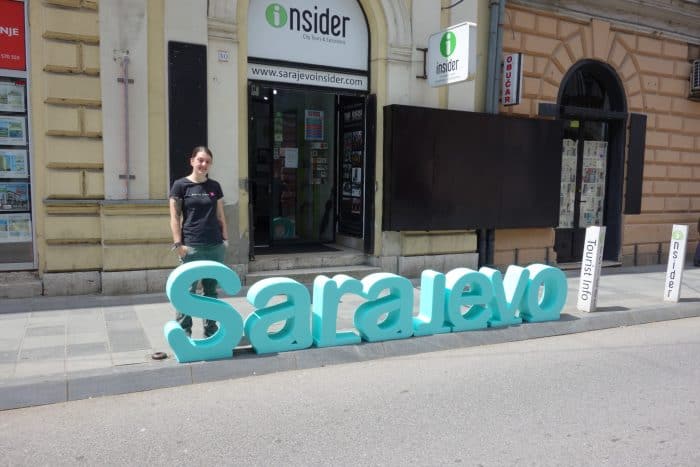
Sarajevo is a city that is easily walkable, and most of the main areas of interest are well within walking distance if you are staying within the city.
Sarajevo does have a network of trams that covers large but not all areas of the city. Depending on which bus station you arrive at (if it is the one nearest the train station), you should take the number 1 tram into town. The other bus station is a little bit more difficult and is located near the Airport. From here, you should take a local bus to the main train/ tram interchange.
Public Transport in Sarajevo
- Trams: The easiest way to travel around central Sarajevo, connecting Baščaršija and the city centre with Marijin Dvor and Ilidža. A single ticket costs around 2.20 KM.
- Trolleybuses: Electric buses that connect southern neighbourhoods and suburbs, including routes to Dobrinja.
- Buses: Connect the city centre with outer neighbourhoods and areas outside of the tram network. A little more confusing to use as a tourist.
- Minibuses: Smaller vehicles serving hillside neighbourhoods and areas that larger buses cannot easily reach. Much more local option that can be a bit tricky to negotiate.
- Airport transfers: Sarajevo International Airport is around 10 km from the Old Town. Airport buses connect with the city centre, and of course, taxis are also available outside the terminal (no Uber here, but an alternative is “mojTaxi”). Allow around 20–30 minutes by road.
Where to stay in Sarajevo
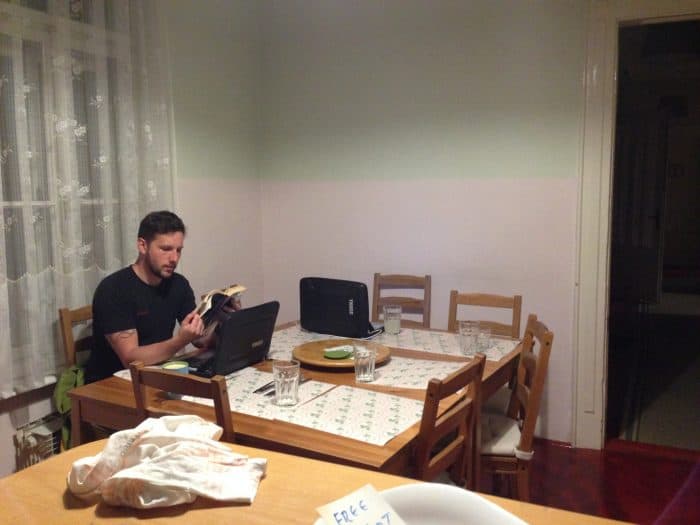
We stayed in a great hostel called “Travellers Home”; this turned out to be one of the best hostels we have ever stayed in (unfortunately, it’s since closed). The place itself is in a converted apartment and has both private rooms on the upper floors and dorms below. We ended up having some unforgettable evenings here chatting to the friendly and knowledgeable staff about the culture, history and future of Bosnia…in what turned out to be quite an intense and enlightening conversation.
Often, even the most amazing city can become overshadowed by the accommodation that sucks! It can put a damper on the mood and bring you down. But here, it really contributed to us loving Sarajevo that much more. We also met some amazing people here whom we have continued to keep in contact with and hope to meet up with again, as well as going as a group up to the bobsleigh tracks.
Book Your Accommodation

Booking.com
Over the course of the last 10+ years of travelling, we’ve used Booking.com to book probably around 90% of our accommodation. These days you can book anything from a luxury resort to budget hotels and even hostels and rentals similar to Airbnb.
Plus, if you make an account, you get access to their ‘Genius’ loyalty program… and DISCOUNTS. Everything is laid out super easy so you know what you’re getting, and honestly, I’m just a really big fan of the platform over other major providers.
Places to Visit in Sarajevo
Bazaar/ Turkish Quarter/ Bascarsija
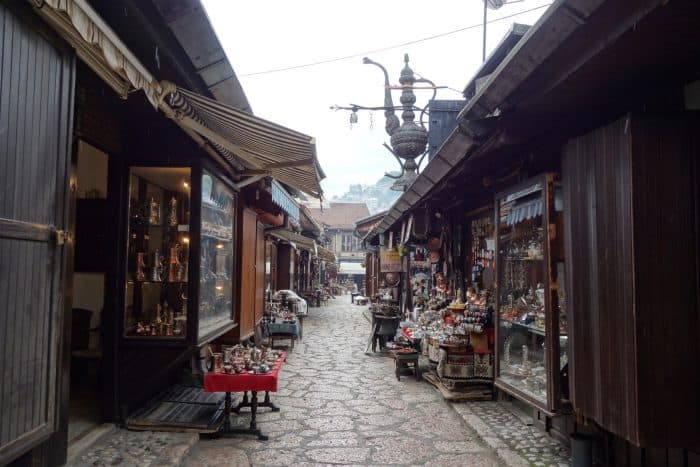
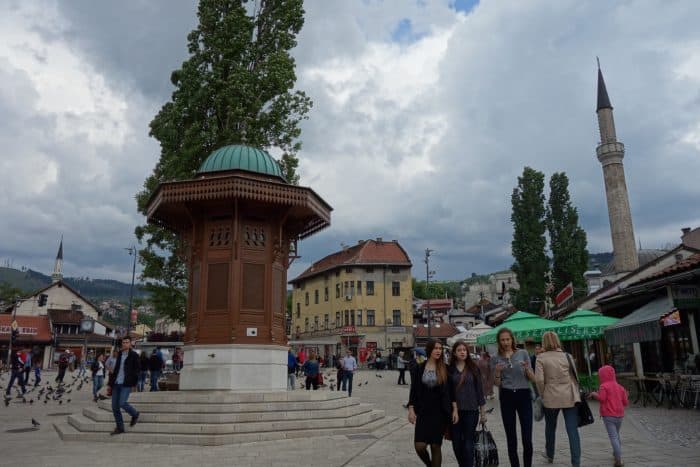
By far the most interesting and culture-filled area of the city, this is where you really not only see but feel the Ottoman influence on the city. The whole area is a maze of stunning mosques, markets, tea houses and traditional eateries that is just a joy to explore.
The old cobbled streets and whitewashed wooden houses and stalls take you back in time to Old Sarajevo. The capital might have come a long way and has some super modern high streets on offer, but these 15th-century streets are the place to be! Don’t miss the Gazi Husrev-Beg’s Bezistan and the Sebilj Fountain.
Sarajevo City Hall
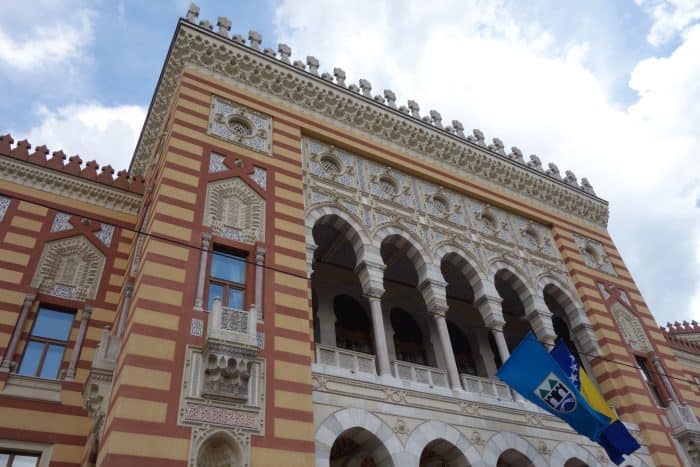
Vijećnica, as the City Hall of Sarajevo is commonly known, is not only a stunning example of Austro-Hungarian architecture that captures the eye and the imagination, but it is also an important historic symbol for the city. Originally built in 1896, this national monument has seen its fair share of important moments in history. It was from here that Franz Ferdinand took refuge between attempts on his life and ultimately the last place from which he departed before those fateful shots.
In more recent history, the building became a symbol of the damage the city suffered in the Siege of Sarajevo, the longest in modern times. The building was all but completely destroyed by Serbian shelling, and some of Bosnia’s most important literally works burnt when the library section fell. Finally reopened in 2014, this building now represents the rebuilt Sarajevo.
The haunting Srebrenica Genocide Exhibition (Gallery 11/07/95)
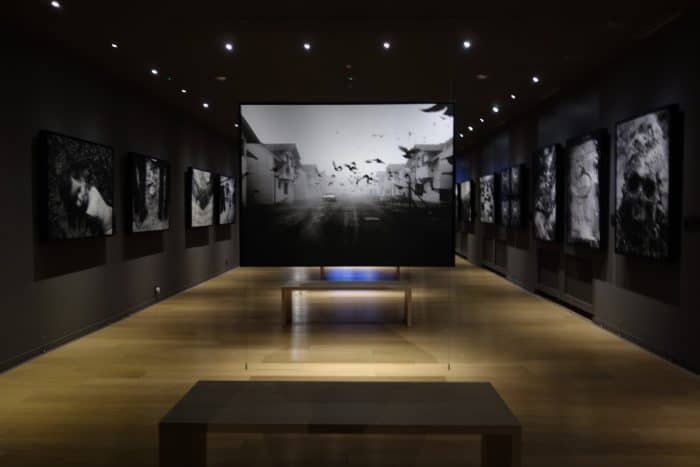
When visiting Bosnia, there is no escaping the horrors of the Balkan war. Many of us grew up seeing the pictures on the TV and reading the headlines in the news. Visiting Bosnia brings this to life and into sharp focus. Many of the events we know about, we visit to get a clearer picture of them.
But one major and sickeningly shocking event we never knew about was the Srebrenica Genocide. Over 8,000 Muslim Bosniaks were brutally massacred in this border town by the Serbs. The exhibition here explores and explains what happened here with some moving photographic and video presentations.
The Abandoned Bobsleigh Track
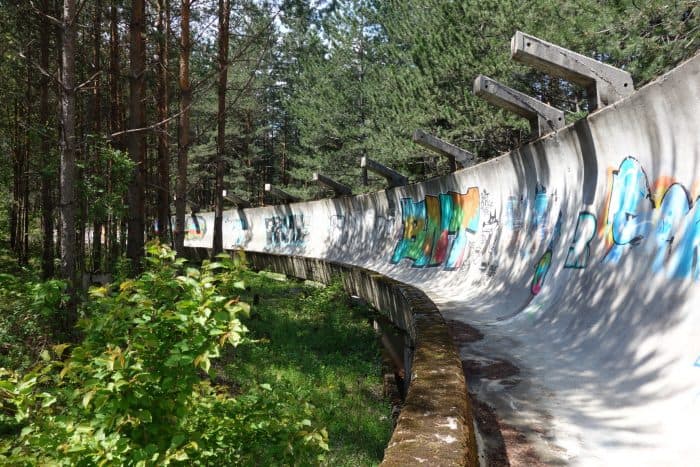
For Urban Explorers such as ourselves, this was one that we had looked forward to for years and a primary reason to visit the city. This one-time beacon of hope for the city of Sarajevo in the 1984 Winter Olympics became a brutal position from which the Serbs launched their attacks on the city.
The once busy and bustling Sarajevo bobsleigh track full of happy spectators and primed athletes ended up as a mine-covered no-go zone. Since the end of the war in the early ’90s, the site has become overgrown and abandoned, with nature and graffiti artists taking it back. The hike up here is well worth the amazing and haunting exploration of this fascinating place, as well as the stunning views down onto the city.
Eat Burek at Saç
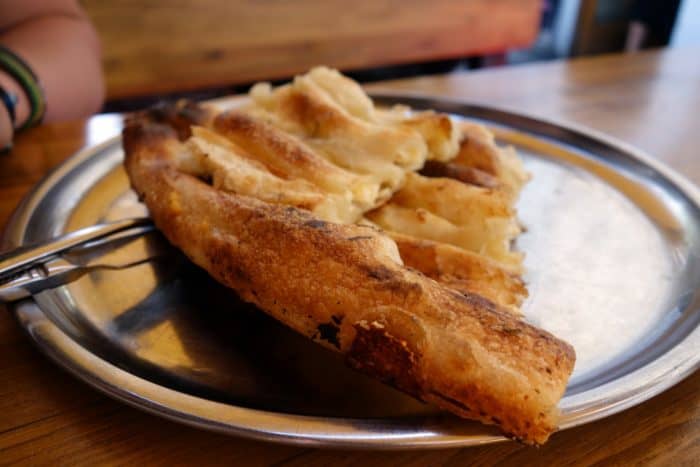
When in the Balkans, there really is only one food you must try: the humble Burek! We have pretty much lived off these for the last 2 months, but by far the best was the one we had over at Saç in the old quarter of the city. Here, this no-nonsense local bar serves up tasty Bureks in several flavours. This savoury pastry dish comes filled with Cheese, Spinach, meat or Pumpkin and is topped off with yoghurt! All for only a small change!
See the most important bridge of modern history!
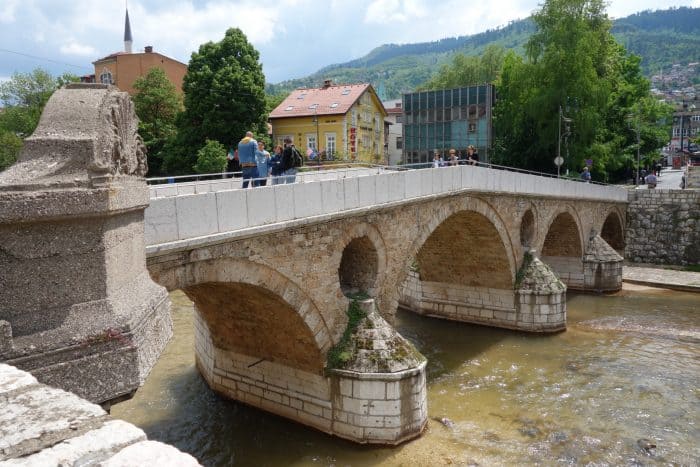
We mentioned him before, but he deserves another shout-out here. But here in Sarajevo, when the Balkan war was still in the distant future, the city was writing another passage in world history. It was on the Latin Bridge on 28 June 1914 that Gavrilo Princip shot and fatally wounded the Archduke Franz Ferdinand and his wife Sophie.
This was the straw that broke the camel’s back and instigated the beginning of the First World War, which in turn led to the Second World War and countless events afterwards. To stand here is to really be at a crossroads in history.
See the tunnels that saved the city during the siege
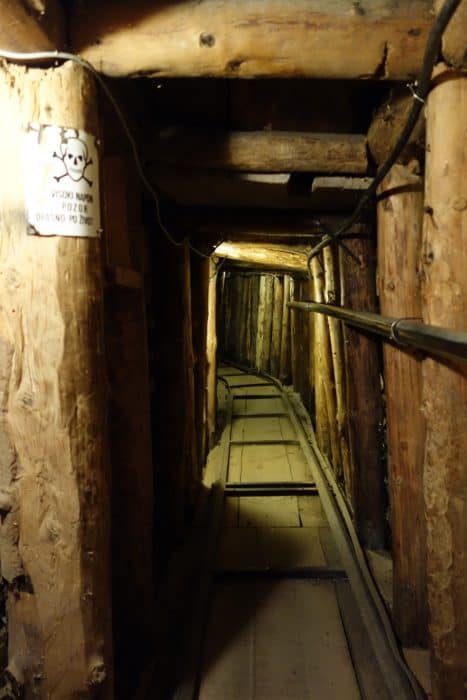
Just a little outside of the city is a remaining section of some of the most important tunnels in the world. Here in the backyard of a local Bosnian, this tunnel allowed the surrounding city of Sarajevo to survive. As the Serbs had cut off all entrances and exits from the city, the tunnel became a way to arm the Bosnians, evacuate women, children, the elderly and the injured and also provide food, supplies and communication to a city under siege.
Without this tunnel, the death toll for the Bosnians would have been inconceivably higher, and the war may have continued for much longer or even been lost. Over 400,000 people fled Sarajevo through here and over 2 million passed through.
Gazi Husrev-beg Mosque
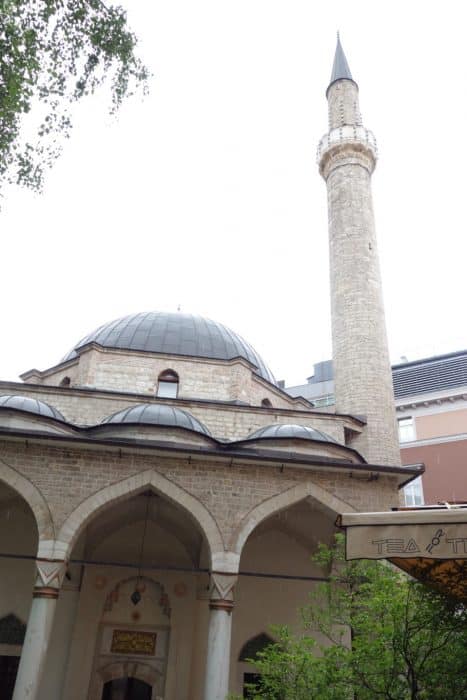
This 16th-century mosque is the largest historical mosque in Bosnia and Herzegovina and one of the most representative of the Ottoman period. It is the centre for Islamic culture not only in the city but the country as a whole and serves as the main congregational mosque.
The mosque was a specific target for the Serbs during the war and, as a result, received a high amount of damage and destruction. They aimed for centres of culture within the city, but now this fully restored monument to Islam in Bosnia is back to its stunning former glory.
Have you ever visited Sarajevo?
There is such a wealth of things to see and do in Sarajevo that it really did become one of our all-time favourite cities. With a unique culture, all of its own and a friendly spirit, this often misunderstood capital came by surprise to us, and we really didn’t want to leave!

Organise Your Trip Here
Share This Post!
For transparency’s sake: Many of the links we have on our site are affiliate links. This means that when you click one of these links and make a booking or purchase, for example: accommodation, gear, insurance or transport, we earn a small commission (at no extra cost to you). Also, know that as an Amazon Associate, we earn from qualifying purchases. Most importantly, know that we still only recommend services, gear and products we believe in and our earned commission helps us keep travelling and bringing you high-quality posts and content.


Yo, I’m Nic (they/them), one-half of The Roaming Renegades.
I’m an adventure (and halloumi) obsessed traveller with a passion for hiking mountains, exploring cities, watching Arsenal win, moshing out to Rammstein in random European fields and getting hopelessly lost on a motorbike somewhere in Asia! I am also a proud member of the LGBT+ community.
I’ve explored 80 countries, lived in Australia and New Zealand, and spent months wandering Southeast Asia, South America and Eastern Europe, all while trying to avoid growing up!
Did it work? I dunno, but my back hurts, and I still collect Pokémon cards! Who wants in?!



Ive always wanted to visit Sarajevo, ever since high school history! it look amazing
Is too! It really lives up to the expectations!
I visited Sarajevo two years ago when my sister was living there for a year as an exchange student. Sarajevo stole my heart as well! It is so charming to walk down the cobblestone streets with a burek in hand, surrounded by the hills. I’m sure you partook in a few shisha sessions with a thimble of coffee (those tiny caffeine servings that they could sip on forever… I just didn’t understand that)! Will definitely be going back one day, sooner rather than later I hope!
It really does seem like a place which steals the hearts of those who really get underneath the skin of it. Everything about it was just so interesting!
sarajevo was a beautiful city. i really was surprised at how charming it was! the coffee was sooo good too.
Sher
http://www.shershegoes.com
Yeah we absolutely fell in love. We expected. Enjoy it but it surpassed all expectations.
hey, still is 😉
Great to know about Sarajevo which I never knew such city existed! I would definitely add it to my travel bucket list.
Annika
Wow, I can’t believe you never knew about it. You couldn’t escape it on the news when we were growing up, but it is a wonderful place.